What Is a Fascia Board?
By True North Eaves · Updated June 25, 2026
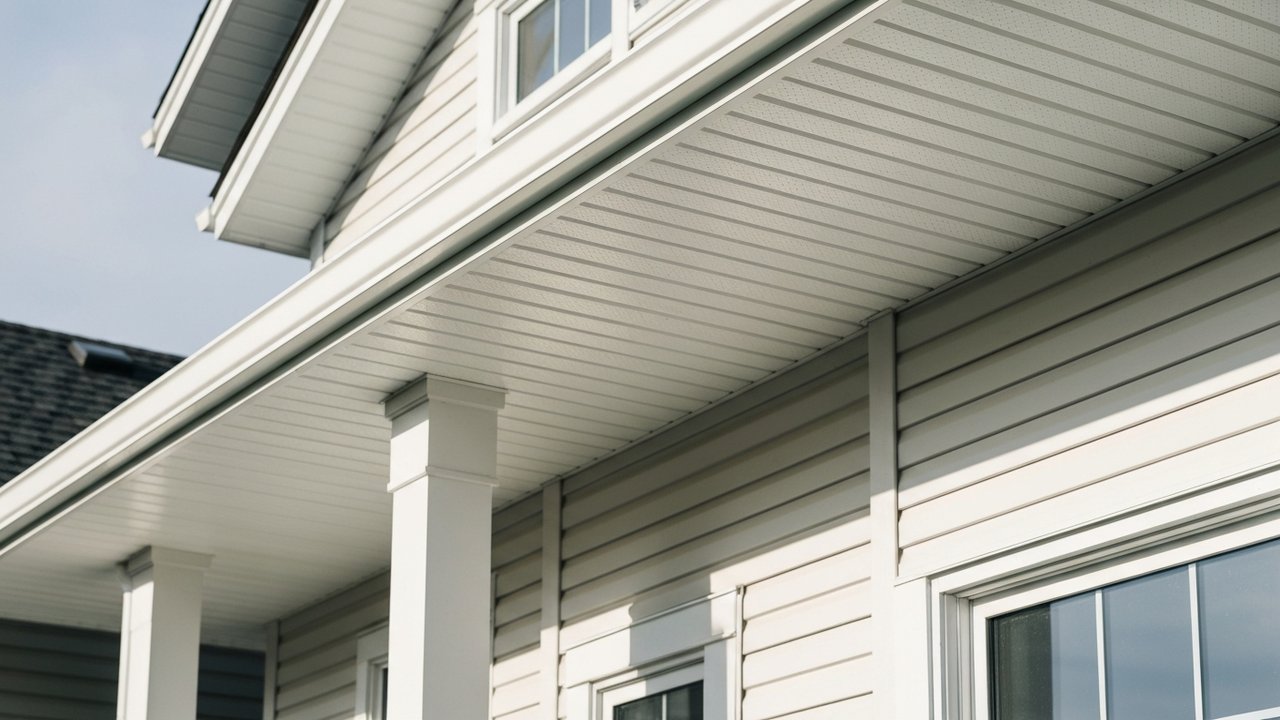
Where the fascia sits on the house
Stand at the end of your driveway and look up at the edge of the roof. The flat board you see facing outward, between the shingles and the soffit, is the fascia. The soffit is the board that covers the underside of the roof overhang, facing down toward the ground. Fascia faces out, soffit faces down. They meet at a corner, and together they close off the eave cavity and give the roofline a clean, finished look.
On a typical Canadian home the fascia runs along the front, sides and rear of the roofline, broken only by downspouts or roof features. On a house with dormers, multiple roof levels or a complex roofline, there are fascia boards at every horizontal edge. It is more board than most homeowners realise is up there.
What the fascia actually does
Fascia has two jobs: structural and finishing.
On the structural side, it supports the bottom edge of the roof and, more critically, provides the surface the eavestrough is fastened to. Eavestrough hangers, brackets or spikes go directly through the trough and into the fascia. That means the fascia carries not just the empty trough but the weight of water sitting in it during a downpour, and in Alberta, Ontario or the Prairies, the weight of ice in January. A rotten or weakened fascia cannot hold that load, and the eavestrough starts to tilt forward and eventually pull free.
On the finishing side, the fascia is the trim piece that makes the roofline read as complete. A painted wood fascia in good shape signals a well-maintained house. One that has gone grey, split or shows bubbling paint is a visible sign that something has gone wrong, and prospective buyers notice.
Fascia and your eavestroughs
These two components are inseparable. The eavestrough is mounted to the fascia and relies on it for support. The fascia, in turn, relies on the eavestrough to route water away cleanly rather than letting it drip down the face.
When the eavestrough clogs and overflows, water spills over the front lip and also runs back behind the trough. That back-drip lands directly on the fascia board. On a dry summer day it might evaporate without incident. In a Canadian spring with weeks of rain and snowmelt, that moisture soaks in repeatedly. Over a few seasons it is enough to start rot in a wood fascia, especially at the bracket attachment points where water tends to collect and sit.
The connection runs the other way too. Once the fascia starts to fail, the eavestrough sags and tilts. A sagging trough holds standing water instead of draining toward the downspout, which corrodes the trough from the inside and becomes a mosquito breeding spot in summer. A failing fascia is rarely just cosmetic. For a detailed look at how this cycle unfolds, see what causes fascia rot.
Common fascia materials
Wood is the traditional choice and still what most older Canadian homes have. It holds paint well when dry but is genuinely vulnerable to rot once moisture gets in regularly. Spruce and pine are common. Cedar lasts considerably longer because of its natural resistance to decay, which is worth knowing if you are replacing a section and have the option to specify the material.
Aluminum-wrapped fascia is the most common replacement choice today. A thin aluminum cladding is formed over an existing board or over a fresh backing piece. It will not rot, holds its colour without painting and handles the freeze-thaw cycle well. Most eavestrough and roofline contractors default to aluminum wrap when they are replacing rotted wood fascia, and it is a sensible default.
PVC or vinyl fascia is another option. It absorbs no moisture at all and never needs paint. In very cold temperatures, particularly in northern Alberta or on the Prairies, some PVC products can become brittle, so it is worth asking a contractor about the specific product they would use in your climate.
Composite and fibre cement options exist for higher-end builds. They are dimensionally stable and accept paint the way wood does, but they are heavier and more expensive to install. Less common on existing homes being repaired, more common on new construction where it is specified up front.
Signs your fascia needs attention
Most homeowners do not notice fascia problems until the eavestrough starts visibly sagging or pulling away from the house. By then the board underneath is often seriously compromised. These are the earlier signals to look for:
- Paint bubbling or peeling in one stretch. Moisture has gotten in at that location, usually from a clog above or a failing joint in the trough.
- Soft or spongy spots when you press on it. Rot has set in and the wood can no longer hold a bracket properly. Painting over soft wood is not a fix; replacement is.
- Staining or darkening below the eavestrough. If water is consistently running down the face of the fascia, the trough is not draining it away as it should.
- The eavestrough pulling forward or sagging at one end. The brackets are losing their grip because the fascia behind them is giving way.
- Carpenter ants or wasps near the roofline. Both target damp or softened wood. Fine sawdust near the eave or buzzing from inside the overhang is worth investigating, since rot is often what let them in.
If several of these appear together, the fascia likely needs replacement rather than a coat of paint. Our fascia services page covers what replacement involves and what to expect.
Repairing versus replacing
A short section of rotted fascia can sometimes be cut out and patched with a matching piece, then capped in aluminum. This is a reasonable approach when damage is genuinely isolated to one spot, usually around a downspout or at a single failed bracket.
When rot has spread along a significant run, full replacement is the better call. Patching around widespread rot leaves the weak sections in place and the problem returns within a few seasons. Any time the eavestrough itself is being replaced, replacing the fascia as part of the same project avoids going back up the ladder later.
If you are booking a free assessment for gutter protection, it is worth asking the consultant to check the fascia condition at the same time. Because LeafFilter installs onto the existing eavestrough, and that trough is fastened to the fascia, the fascia condition matters for the installation to hold properly. Book a free in-home assessment and you get eyes on the whole system, not just the guards.
How keeping the eavestrough clear protects the fascia
The fastest way to age a fascia board is to let the eavestrough above it overflow for seasons on end. Every overflow event dumps water behind the trough lip, down the face of the fascia, into the bracket holes and into any small cracks in the wood. Over several Canadian winters, that repeated soaking and freezing opens the wood up further each cycle.
A quality gutter guard keeps debris out of the trough so it drains freely and does not overflow. Less overflow means less moisture on the fascia, which slows deterioration. For homes with heavy tree cover, especially maples and conifers, this is a meaningful benefit beyond just reducing the cleaning chore. It is not a rescue for fascia that is already failing, but for a sound roofline it genuinely extends the life of the system. More on whether the protection is worth it for your home in are gutter guards worth it.
Frequently asked questions
What is the difference between fascia and soffit? Fascia is the board that faces outward at the edge of the roofline, and it is the board the eavestrough bolts to. Soffit is the board that covers the horizontal underside of the roof overhang, between the fascia and the wall. They face different directions and are separate pieces, though they are installed together and both need to be in good shape for the eave to function properly.
Can I replace fascia myself? The work is within reach for a handy homeowner: remove the eavestrough, pry off the damaged board, fasten a new one, re-hang the trough. The complications are working safely at roofline height along the full perimeter of the house, and making sure the trough is re-hung with the correct slope so water drains toward the downspout rather than pooling. On a tall or complex roofline most homeowners are better off leaving it to a contractor who has the staging and experience to do it quickly.
Will replacing the fascia fix my leaking eavestrough? Not necessarily. A trough can leak at its joints or seams regardless of what is behind it. If you are seeing water dripping along the wall, check both the trough joints and the fascia condition. A leaking joint combined with rotted fascia behind it is a common combination, since the same overflow that soaks the fascia also stresses the trough seams.
Does a LeafFilter assessment include looking at the fascia? Yes. The free in-home assessment covers the eavestrough system as a whole, including the fascia, because the fascia condition affects whether the installation will hold properly long term. If there is significant damage, that conversation happens at the assessment stage so you know exactly what the project involves before any work is scheduled.
Want this looked at on your own home?
Book a free, no-obligation in-home assessment.
Book my free assessment →