Are Gutter Guards Worth It in Canada?
By True North Eaves · Updated June 17, 2026
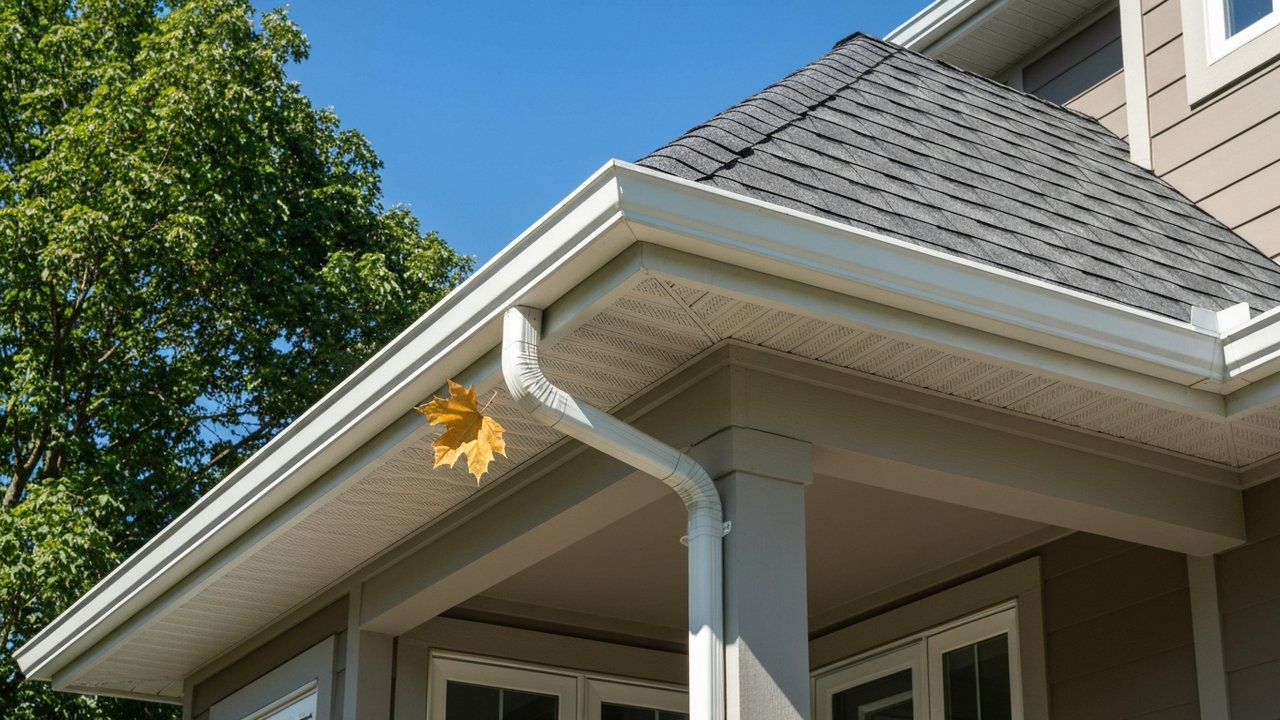
What gutter guards actually do
An eavestrough has one job: catch the water coming off your roof and route it away from the house through the downspouts. When it fills with leaves and needles, it overflows. That overflow soaks the fascia board behind the trough, drips down the wall, and dumps water right at the foundation. Gutter guards keep the debris out so the trough keeps doing its job, and so you are not climbing a ladder to dig it out every season.
Where they are clearly worth it
- You have a lot of trees. Maples, oaks and especially conifers drop constantly. The more debris your roof catches, the more a guard does for you.
- Your roof is tall, steep or hard to access. Cleaning a two or three storey eavestrough is genuinely dangerous. Taking that risk off the table has real value.
- You will not keep up with cleaning. An eavestrough only protects the house if it is clear. If the seasonal cleaning is not happening, a guard that keeps it clear is doing real work.
- You keep getting overflow or ice problems that trace back to clogged troughs.
Where they matter less
If you have a home with no overhanging trees and your eavestroughs almost never clog, the case is weaker. A guard still helps, but the urgency is lower. Be honest about your own situation. That is the kind of straight answer we give at an assessment, including when the answer is that you do not need much right now.
Not all guards are equal
This is where worth-it lives or dies. Fine stainless micromesh on a solid frame keeps out even pine needles and grit while letting water through, and it is built to last. Coarse screens let needles through. Reverse-curve hoods can let needles ride the water around the curve. Foam and brush inserts sit inside the trough and trap debris instead of excluding it, and they are a maintenance headache. If you are going to do this, do it with a system that actually solves the problem.
How to decide
Forget trying to price it out on a web page. The real question is practical: how much debris does your roof catch, how risky is it to clean, and how reliably will the cleaning actually get done. For homes with trees or height, protection usually earns its place. For a low-debris home that rarely clogs, it is closer. If you want the pricing picture, we explain why there is no sticker price and where LeafFilter sits in the market in how much does LeafFilter cost in Canada.
How we help
True North Eaves is an independent LeafFilter consultant. We book a free in-home assessment, look at your trees, roof and existing eavestroughs, and tell you honestly whether protection is worth it for your home. If it is, we book it through LeafFilter, and the existing troughs are cleaned, realigned and sealed as part of that install. If it is not the right call, we say so. Book a free assessment or check the service areas we cover.
Frequently asked questions
Do gutter guards work on pine needles? The fine ones do. Stainless micromesh has openings small enough to keep needles out while passing water. Coarse screens, reverse-curve hoods and foam or brush inserts all struggle with needles specifically.
Will I never clean my eavestroughs again? You will do far less. A good micromesh system keeps the inside of the trough clear; fine grit and pollen can build a film on the mesh over years, so plan on an occasional rinse rather than digging debris out by hand.
Are the bargain clip-on guards worth it? Usually not in the long run. Foam and brush inserts trap debris and are hard to maintain, and coarse screens do not stop needles, so the problem comes back.
How do I know if they are worth it for my home? Look at your trees, your roof height, and how often your troughs actually clog. A free in-home assessment gives you a clear answer for your specific situation.
Want this looked at on your own home?
Book a free, no-obligation in-home assessment.
Book my free assessment →