What Causes Fascia Rot, and How to Stop It
By True North Eaves · Updated June 21, 2026
What the fascia board actually does
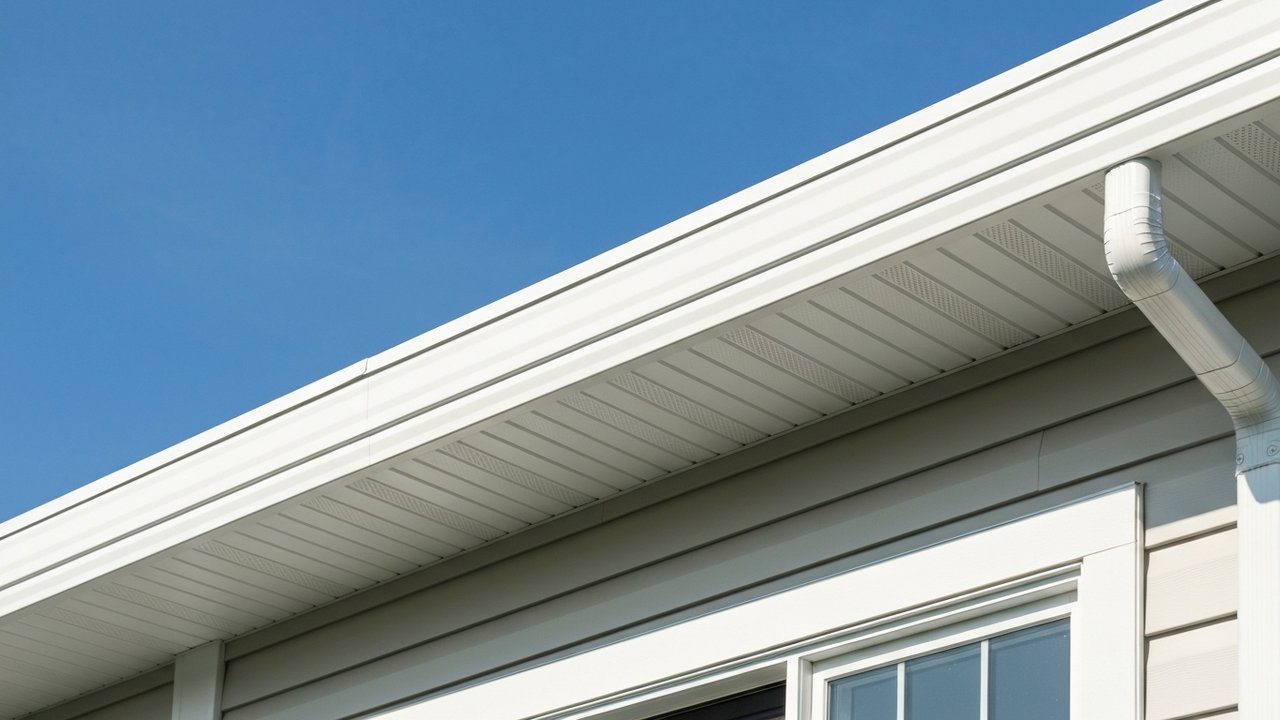
The fascia is the long horizontal board that runs along the bottom edge of your roofline, directly behind the eavestroughs (called gutters in many parts of the country). It is the mounting surface for the trough and gives the roofline a finished, weatherproof edge. Most Canadian homes have wood fascia, typically spruce or pine, though some newer builds use PVC or fibre-composite materials that are more resistant to moisture.
Because it sits immediately behind the eavestrough, the fascia is the first thing water reaches when something fails in your drainage system. The inside face of the board was never designed to get wet regularly, and when it does, rot follows. Wood rot is a fungal process: the fungi that break down wood need consistent moisture to establish and spread. Cut off the moisture, and the rot stops. Keep supplying it, and the board eventually crumbles.
The main cause: eavestrough overflow
If you ask a roofer or carpenter what caused a rotted fascia, they will almost always point to the same thing: the eavestrough above it was clogged, pulling away from the house, or pitched wrong, so water ran behind the trough rather than through it.
When eavestroughs fill with leaves, seeds, pine needles and compacted debris, they overflow over the front lip. Some of that water lands in front of the house, but a meaningful portion runs down the back of the trough and directly onto the fascia. This can happen during every rain event, sometimes for years, before a homeowner notices the board beginning to soften or discolour.
The second overflow trigger is a trough that has come loose. Fasteners work free over time, especially through freeze-thaw cycles. When the trough sags away from the fascia even slightly, that gap channels water straight onto the wood rather than routing it toward the downspouts. The board gets wet behind a surface that appears intact from the ground, which is why this kind of damage is often further along than it looks by the time someone investigates.
Other things that accelerate rot
Overflow is the main driver, but several other factors compound it.
Ice dams. When heat escapes through the attic and warms the roof deck, snow melts at the top of the roof and runs down to the colder overhang where it refreezes. As ice accumulates, meltwater backs up behind it. In Alberta and across the Prairies, where prolonged cold snaps are regularly interrupted by above-zero days, this cycle can repeat multiple times each winter. The fascia stays wet for extended periods, which is exactly the condition rot exploits. A clogged eavestrough makes ice dams worse by giving that backed-up meltwater nowhere to drain.
Poor attic ventilation. An under-ventilated attic holds heat in winter and moisture in summer. In winter, this worsens the roof-surface temperature unevenness that causes ice dams. In summer, heat and humidity near the eaves can drive condensation into the back side of the fascia, adding moisture from inside rather than outside.
Improper eavestrough pitch. A trough should slope gently toward the downspout, typically a few millimetres per metre of run. A flat or reverse-pitched section holds standing water rather than draining it. That standing water is in constant contact with the back of the trough and the fascia behind it, keeping the wood wet between rain events rather than letting it dry out.
Overhanging vegetation. Tree branches above the roofline keep the fascia shaded and damp after rain. They also deposit debris directly into the troughs, accelerating clog buildup. Moss and lichen can establish on the wood itself if it stays wet long enough, and once they take hold, the organic matter holds additional moisture against the surface.
How to spot fascia rot early
Fascia rot is often visible before it becomes structurally serious, if you know what to look for.
- Soft or spongy wood. Press a screwdriver tip gently against the board. Sound wood resists; rotting wood dents or crumbles with light pressure.
- Peeling or bubbling paint. Moisture moving through wood lifts paint from the outside. New blisters on fascia paint are often one of the earliest visible signs.
- Dark staining or streaks. Discolouration running down from behind the trough indicates consistent water contact at that point.
- Visible sagging or separation. If the trough is pulling away from the fascia, or if the fascia appears to bow outward, the internal structure may already be compromised.
- Moss or dark organic growth on the board surface. This means the wood has been wet long enough to support plant life, and the underlying fibre is likely already softening.
Do not wait for the board to look obviously damaged from the ground. By the time rot is clearly visible at a distance, it has usually been progressing for a season or two.
How to stop fascia rot
The fix follows the water. Every intervention that keeps water flowing through the eavestrough and away from the fascia reduces the risk of rot establishing or spreading.
Clear and realign the eavestroughs. A trough full of debris will overflow regardless of what else you do. Getting the system clear and properly pitched is the starting point. If sections have sagged, they need to be refastened and re-sloped toward the downspouts.
Reseat any loose troughs. Where fasteners have worked loose and the trough has pulled away from the fascia, the gap needs to be closed. Leaving it open means every subsequent rain delivers water directly behind the trough.
Consider eavestrough protection. If the root cause of overflow is a trough that fills with debris faster than it gets cleaned, a micro-mesh protection system removes that problem at the source. Fine stainless micro-mesh keeps leaves, pine needles and grit out of the trough while still passing water through. DIY metal micro-mesh panels available at hardware stores work on the same principle and are a legitimate option for homeowners comfortable on a ladder. Professional systems typically add a factory warranty and fitted installation. You can read more about how the different types compare in micromesh vs screen vs foam gutter guards.
Address ice dam sources. If ice dams are contributing to your water intrusion, the long-term correction is improving attic insulation and ventilation so the roof deck stays cold and snow melts uniformly. An eavestrough protection system helps here indirectly: a trough that drains freely is less prone to the ice backup that forces meltwater behind the fascia.
Replace damaged fascia before installing protection. Installing eavestrough guards over a rotted fascia locks in moisture rather than fixing the problem. If the board is soft, it should be replaced first so the new trough has a solid mounting surface and the moisture source is gone.
Our fascia service covers assessing and replacing damaged sections, and ensuring the eavestrough system is set up correctly before any protection goes on top. If you are not sure whether your fascia is in sound enough shape, a free in-home assessment gives you a clear picture.
When repair becomes replacement
Small sections of soft fascia can sometimes be repaired by cutting out the affected portion and splicing in new material, provided the surrounding wood is sound. In practice, rot tends to spread, and a board that looks borderline from the outside is often worse once you open it up.
If more than a quarter of any given run of fascia is soft, or if there is rot at the junction with the soffit, full replacement of that section is typically the better call. Trying to save compromised wood that will continue absorbing moisture is a temporary fix at best. The board needs to come out, the cause of the moisture needs to be resolved, and new material needs to go in under dry conditions.
After any fascia work, the goal is to prevent the cycle from starting again: eavestroughs that are properly pitched, securely fastened to solid fascia, and kept clear of debris so overflow does not re-introduce moisture to the new board.
Frequently asked questions
Can I paint over fascia rot to protect it? Painting over soft wood does not stop rot and typically hides the damage until it is worse. Paint requires a sound substrate to adhere to. If the wood is soft, the coating will lift and moisture will continue moving through the board underneath. Soft sections need to be cut out and replaced with sound material before any paint or sealant is applied.
Does LeafFilter help prevent fascia rot? Yes, indirectly, because it removes the main cause: overflow from clogged eavestroughs running behind the trough and onto the fascia. A clean, properly draining eavestrough that never overflows is a board that stays dry. Whether a protection system makes sense for your home depends on how much debris your roof catches and how often your troughs actually clog, which is exactly the kind of question a free assessment answers. You can also work through the decision in are gutter guards worth it in Canada.
How is fascia rot different from wood rot elsewhere on the house? The same fungi are responsible wherever wood stays wet long enough. What makes fascia rot so common specifically is location: right behind the eavestrough, where a failure in the drainage system delivers water reliably and repeatedly. It is a predictable consequence of a drainage problem rather than a random one, which means it is largely preventable if the eavestrough is working correctly.
Should I replace the fascia or the eavestroughs first? It depends on which failed first. If the fascia rotted because the eavestrough overflowed for years, the fascia needs to be replaced and the drainage system corrected so the pattern does not repeat. If the eavestrough simply pulled away from still-sound fascia, refastening the trough may be enough. When full eavestrough replacement is happening, damaged fascia behind the troughs is almost always dealt with at the same time since the area is already exposed and accessible.
Want this looked at on your own home?
Book a free, no-obligation in-home assessment.
Book my free assessment →