Micromesh vs Screen vs Foam Gutter Guards, Compared
By True North Eaves · Updated June 18, 2026
The four types, in plain terms
People say “gutter guard,” but they are really talking about four very different products that happen to sit on top of an eavestrough.
Foam inserts are wedges of porous foam you push down into the trough. Water is meant to soak through while debris stays on top. They are cheap and you can install them in an afternoon.
Brush guards look like a long bottle brush sitting in the trough. Leaves catch on the bristles, water runs underneath. Also cheap, also a quick do-it-yourself job.
Screens are panels of metal or plastic mesh with relatively large holes that lay over the trough. They keep out big leaves and twigs. The cheaper plastic ones are common at hardware stores, the metal ones hold up better.
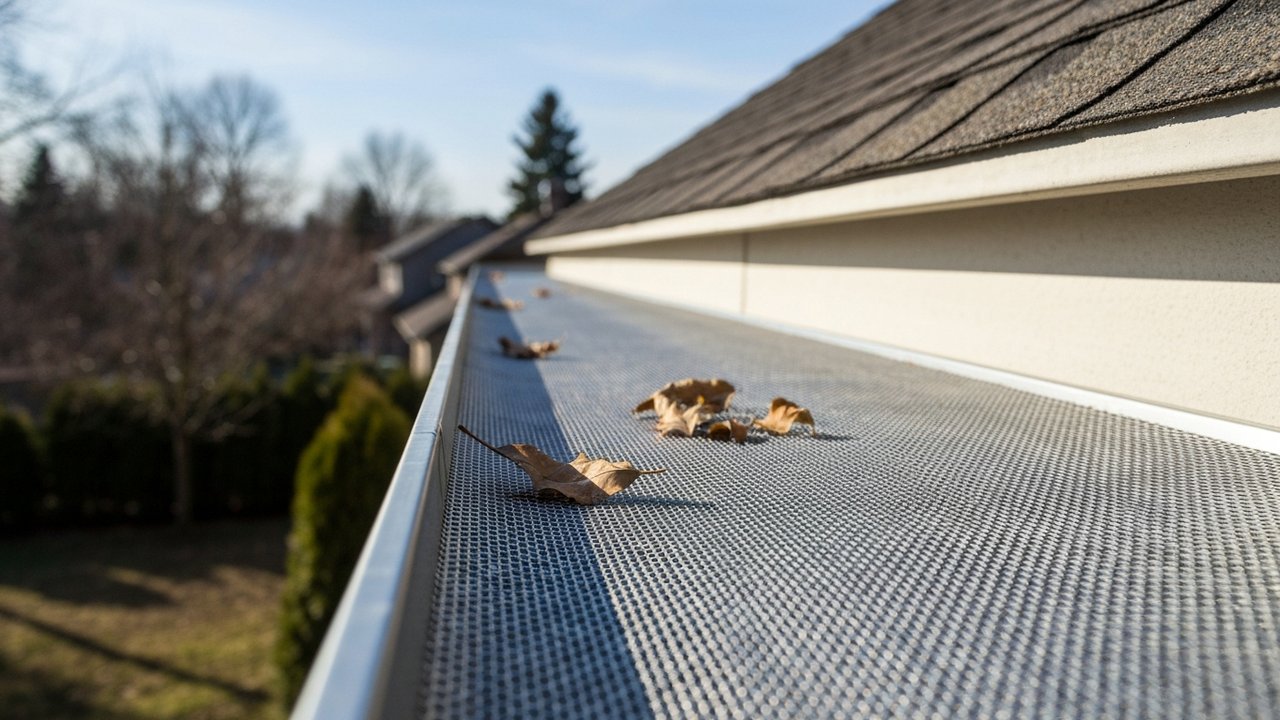
Micromesh is a fitted system with a very fine stainless steel screen on a frame. The openings are small enough to block fine material like pine needles, shingle grit and seed pods, while surface tension pulls water through. This is the category professional systems like LeafFilter sit in.
How they compare on price
Nobody can give you a real number from a web page, because cost follows the size and complexity of your roofline, not a flat per-house rate. What is fair to say is where each type generally sits on the scale, from least to most expensive.
Foam and brush inserts are the budget end. You buy them by the length and fit them yourself, so the up-front outlay is small. Metal and plastic screens are also on the lower side, a step up from foam in most cases. Foam, when you compare like for like, tends to land around the mid range once you account for how much you need and how often you end up replacing it.
Professional micromesh and reverse-curve systems are the premium end. You are paying for a fitted product, better materials and proper installation, and usually a manufacturer warranty behind it. LeafFilter, as a professional micromesh system, is not the most expensive option on the market and not the least expensive, it sits somewhere in the middle of that professional tier. The honest figure for your home only comes from looking at your actual eavestroughs, which is what the free assessment is for.
A cheaper guard that clogs and needs replacing is not really cheaper over the years, which is the part the sticker never tells you.
How they compare on performance
This is where the order changes. Cheapest to buy is not cheapest to live with.
Foam struggles in Canadian conditions. It traps fine grit and seeds on its surface, holds moisture, and over a few seasons it breaks down, grows debris on top, and can even let things root in it. In a snowy, freeze-thaw climate it has a hard life.
Brush has the same basic problem. Needles and small debris weave right into the bristles, and then you are pulling the whole brush out to clean it, which defeats the point.
Screens are a real improvement for big leaves, but the openings that let water through also let pine needles, maple keys and grit through. If you have conifers, a plain screen will not keep your trough clean.
Micromesh is the one that actually keeps fine debris out, which matters a lot in Canada where spruce and pine needles are the real clog culprit. A well-fitted micromesh system handles leaves, needles and grit and keeps the eavestrough flowing, which is why it is the type most worth paying up for if you want to stop thinking about it.
Which one is right for your home
Start with your trees. If you are surrounded by conifers or have heavy leaf fall, fine debris is your enemy and only micromesh reliably handles it. If your lot is fairly open with the odd big-leaf tree, a metal screen may be enough to take the edge off.
Then look at your roof. A tall or steep roofline makes do-it-yourself cleaning genuinely dangerous, and that is exactly the situation where a fit-and-forget micromesh system earns its keep, because you are buying your way off the ladder for good. For a low single-storey home that rarely clogs, the math is closer.
If you want to think it through for your specific roofline, you can book a free in-home assessment and get a straight answer with no obligation. For a wider look at whether protection makes sense at all, see are gutter guards worth it in Canada.
Where LeafFilter and True North Eaves fit
We are independent LeafFilter consultants, not an authorized dealer, and we book free in-home assessments. If you want a do-it-yourself metal micromesh from the hardware store, that is a legitimate choice and we will say so. What we book is the professional LeafFilter micromesh system, where the existing eavestrough is cleaned, realigned and sealed as part of the install rather than billed as a separate service. There is no standalone cleaning service here, the cleanup is simply part of fitting the system properly.
FAQ
Is foam or brush ever a good choice? For a quick, cheap fix on a low roof with light debris, foam or brush will slow down big leaf buildup for a season or two. The catch is they tend to trap fine grit, hold moisture and break down, so most homeowners end up pulling them out and starting over. As a long-term answer they rarely hold up.
Why does micromesh cost more than a screen? You are paying for a much finer stainless screen, a proper frame, and professional installation that includes cleaning and resetting your eavestroughs. A plain screen keeps out big leaves only, while micromesh blocks the fine needles and grit that actually clog troughs in Canada, and it is built to last, which is where the added cost goes.
Will any guard let me skip eavestrough cleaning forever? A good micromesh system gets you very close, keeping the trough clear so you are off the ladder, though you should still glance at your roofline and downspouts now and then. Cheaper foam, brush and screen guards do not get you there, since fine debris still collects in or on them.
Which guard handles pine needles? Micromesh, clearly. Pine and spruce needles are thin enough to slip through screens and to weave into brush, and they pack onto foam. The fine openings of a micromesh screen are what keep needles out while still passing water.
Want this looked at on your own home?
Book a free, no-obligation in-home assessment.
Book my free assessment →