Eavestrough vs Gutter: Is There Any Difference?
By True North Eaves · Updated June 17, 2026
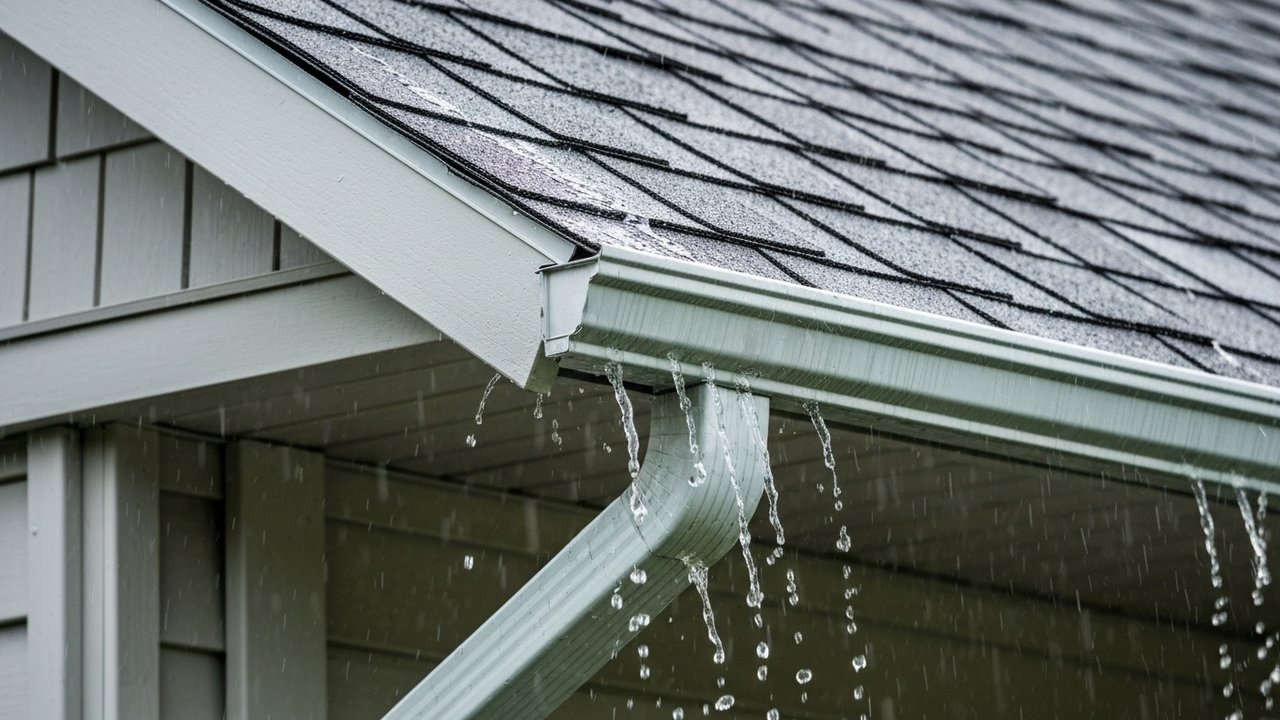
Why Canada says “eavestrough”
The word has straightforward roots. “Eave” refers to the part of a roof that overhangs the wall below it, the edge where water drips off. “Trough” is the channel that catches it. Put them together and you have an accurate description of the hardware. British settlers brought that vocabulary to Canada, and it took hold in the building trades here and in building codes at the provincial level, while American usage shifted toward the shorter “gutter.”
Older British texts actually use both words more or less interchangeably, so neither is newer or more technical than the other. The Canadian preference calcified over decades through the trades and materials supply chains. Walk into any building supply store in Alberta, Ontario or British Columbia and you will see it labelled as eavestrough. Order from an American supplier and the same product arrives in a box that says gutter.
Are they literally the same thing?
Yes. Both words describe:
- A length of formed channel, almost always aluminium, running horizontally along the fascia board at the lower edge of the roofline
- Sloped slightly toward the downspouts so water flows out rather than pooling
- Sealed at the ends and joined at corners with mitred pieces or prefabricated corners
- Connected to vertical downspouts that carry water to grade or underground drainage
The profile shapes, gauges, and materials are identical across both markets. Canadian contractors install the same aluminium K-style trough that American contractors install. The product is the same. Only the label on the box and the word in the quote differ.
The one place terminology trips you up
Online searches. A homeowner in Edmonton who types “gutter replacement Edmonton” will find most of the same contractors as someone who types “eavestrough replacement Edmonton,” but not always all of them. Some businesses optimise their website for one term and not the other. If you are not finding what you need with one word, try the other.
Product research runs into the same pattern. American review sites, YouTube tutorials, and big-box retailer product pages all say “gutter.” Canadian product data sheets often say “eavestrough.” They are describing the same profiles in the same aluminium, so do not let the word difference make you think you are reading about a different product.
Materials: what actually differs
Since eavestrough and gutter are the same thing, the differences that matter in practice come down to material and profile.
Aluminium is what most Canadian homes have. It does not rust, it is relatively light, and it comes in long seamless runs that most contractors roll on-site from coil stock. It holds up to the freeze-thaw cycles that are common across the Prairies, Ontario and the coasts, which is why it became the residential standard. Nearly all eavestrough replacement in Canada is aluminium.
Vinyl is lighter than aluminium but becomes brittle in temperature extremes. Alberta winters are hard on vinyl, and it tends to crack and distort over time. It was popular for a while and you still encounter it, but aluminium is the more common choice for new installs.
Steel is thicker and stronger than aluminium, more typical in commercial or industrial settings. It is heavier to work with and will eventually rust where the finish gets compromised.
Copper is a premium material used mostly on heritage buildings or high-end custom homes where the patina look is part of the point. It outlasts most other options, which is part of why it shows up where aesthetics matter as much as function.
For most Canadian homeowners the material decision is aluminium, and then the question is which profile size suits the roof. If the existing troughs are already failing, eavestrough replacement is the right starting point before thinking about any protection.
K-style vs half-round
Two profiles show up consistently on Canadian homes. K-style has a flat back, a flat bottom, and an ogee-curve front face that gives it a slight decorative look from the street. It handles a relatively high water volume for its width and has been the residential standard for the past 50 years or so. Half-round is a simple semicircle: it drains cleanly, has no inside corners for debris to lodge in, and was the standard before K-style took over. You still see half-round on older homes and heritage buildings where matching the original look matters.
Both work well. The choice usually comes down to matching what the rest of the roofline already has. Mixing profiles mid-roofline looks off and can create drainage irregularities at the joints.
The connection to fascia and soffit
Eavestrough mounts to the fascia board, the flat board that closes off the rafter tails along the eave. If the fascia is soft or rotting, a new eavestrough installation means addressing that first. Water backing up behind a trough and sitting against the fascia board is one of the most common paths to fascia deterioration, and it usually goes unnoticed until the wood is well into the rot.
Above the fascia sits the soffit, which covers the underside of the eave. Soffit, fascia, and eavestrough together form the full eave assembly. When one component needs attention you often end up touching all three, because the failure of one tends to accelerate the others.
As for gutter protection: there are DIY metal micromesh panels that a handy homeowner can install, and they are a legitimate route if you are comfortable working at height and want to source and fit them yourself. If you would rather have it done professionally with a warranty behind it, that is a different decision. Our guide on whether gutter guards are worth it walks through exactly that, including where protection earns its place and where the case is weaker.
Frequently asked questions
Is “eavestrough” a Canadian word? It is the Canadian standard. You will find it in contractor quotes, provincial building codes, and building supply stores across the country. “Gutter” is the American standard for the same component. In everyday Canadian speech both words get used, particularly in the phrase “gutter guard,” and in the trades they mean the same thing.
Should I say “eavestrough” or “gutter” when getting quotes? Either works. Any Canadian eavestrough contractor understands both words. Use whichever comes naturally to you. If you are searching online and not finding much with one word, try the other, since some contractors optimise for one term and not both.
What is the difference between an eavestrough and a downspout? The eavestrough is the horizontal channel that runs along the roofline and catches water coming off the shingles. The downspout is the vertical pipe that connects to the eavestrough and carries that water down to grade. They are separate components of the same drainage system. A clogged or disconnected downspout makes the whole system useless even if the trough itself is perfectly clear.
Do I need new eavestroughs before I can get gutter guards? Not always, but sometimes. If the troughs are sound, a protection system can go on top. If they are sagging, pulling away from the fascia, or failing, the right order is to address the eavestrough first. A free in-home assessment will tell you honestly which situation you are in. Book a free assessment and we will look at both questions together at your home.
Want this looked at on your own home?
Book a free, no-obligation in-home assessment.
Book my free assessment →