Do Gutter Guards Actually Work?
By True North Eaves · Updated June 19, 2026
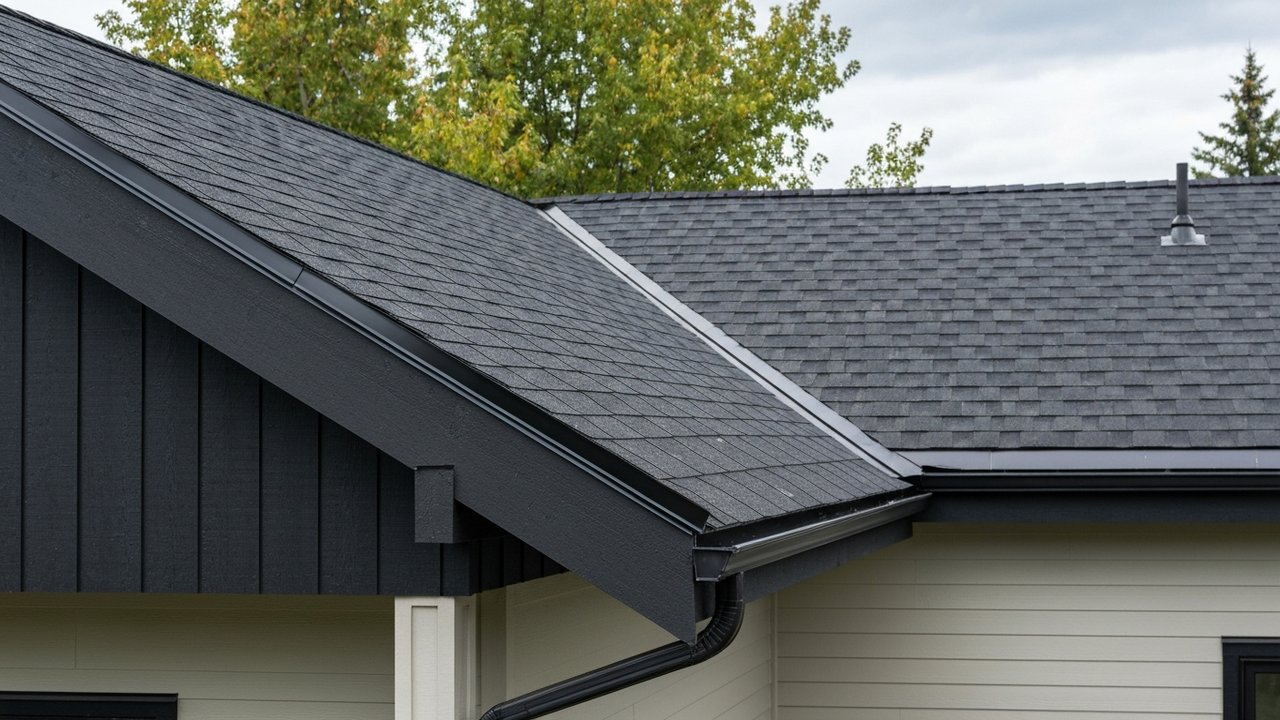
What gutter guards are actually trying to do
An eavestrough (often called a gutter) has one job: catch the water coming off your roof and route it away from the foundation through the downspouts. When it fills with debris, it overflows. That overflow soaks the fascia board behind the trough, drips down the exterior wall, and deposits water right at the base of the house.
In Canada that debris is not just autumn leaves. It is maple keys in spring, pine needles year-round in much of the country, cottonwood fluff in early summer, and the fine granules that wash off asphalt shingles over years. A well-designed guard handles all of it without letting the trough clog or the downspout back up.
The useful question is not simply whether guards work but whether a specific type works for your specific debris load. Those are different questions.
How different guard types actually perform
The performance gap between the best and the worst guards is wide, and the price difference does not always predict which is which.
Fine stainless micromesh is the most effective option on the market. The mesh openings are small enough to block pine needles and roof grit while still allowing water to pass through. Because nothing gets inside the trough, there is no debris buildup to clean. The mesh is the part that does the work; quality versions hold it on a rigid frame rather than a flexible snap-on strip, which keeps the guard from sagging, lifting in wind, or cracking in cold. These sit at the premium end of the market.
Reverse-curve or surface-tension guards let water follow the curve of the hood down into the trough while debris is supposed to fall off the outer edge. They handle large leaves reasonably well. Pine needles are the problem: they are thin enough to ride the water over the curve and into the trough. These tend to cost as much as or more than micromesh and work less reliably in areas with conifers.
Coarse mesh and snap-on screens are widely available at hardware stores and easy to install yourself. They sit at the lower end of the price range. They stop large leaves but let pine needles and smaller debris through. In practice, many homeowners end up cleaning debris off the top of the screens rather than digging it out of the trough, which is marginally easier but not a real solution. In freezing weather the mesh can trap ice.
Foam and brush inserts sit inside the eavestrough rather than covering it. They are among the least expensive and easiest to install. The tradeoff is that they trap debris in the foam or bristles rather than excluding it, and in damp or humid conditions they grow mould and moss. They do not handle Canadian winters well and are generally the weakest long-term choice.
For a more detailed comparison of materials, micromesh vs screen vs foam gutter guards breaks down the tradeoffs by type.
What the Canadian climate does to gutter guards
Mild climates are forgiving of mediocre materials. Canada is not a mild climate.
Freeze-thaw cycles put real stress on clips, plastic housings and flexible mounting hardware. A guard that fits snugly in October may gap and lift by March. A rigid frame and stainless mesh tolerate expansion and contraction far better than flexible snap-on clips and strips.
Heavy spring melt in Alberta, Saskatchewan and parts of BC can push more water volume through an eavestrough in two or three weeks than the rest of the year combined. A guard that partially restricts water flow can cause overflow during high-volume events if the mesh is not kept clear of surface buildup. Regular rinsing of the mesh surface, every few years rather than every season, handles this.
Conifers. A large portion of Canadian homes in Alberta, BC, Ontario and Atlantic Canada have spruce, pine or fir trees close by. Pine needles are the stress test for any gutter guard. They are long and thin enough to slip through or around most guard types except fine micromesh. If you have conifers, the guard type choice matters more than in a deciduous-only yard.
Ice and snow load. Guards do not cause ice dams. Ice dams form when heat escapes through the roof, melts snow from below, and that water refreezes at the cold eave. A properly installed guard does not change that heat-loss dynamic. A poorly fitted guard that holds standing water at the trough edge could contribute at the margins, but the root cause is almost always insulation or ventilation.
Where guards make the biggest difference
The clearest case is a home with several overhanging trees and a roofline that is tall, steep, or both. The twice-yearly ladder job in that situation carries real fall risk. Taking that risk off the table has practical value that is easy to see.
A second case is protecting the home itself. Eavestroughs that overflow regularly deposit water at the foundation and soak the fascia over time. If you are already seeing signs that your eavestroughs are failing, a clogging problem is often part of the cause.
Guards matter less on a low-debris home surrounded by open lawn. They still provide some benefit, but the urgency is lower. An honest assessment of your tree canopy and cleaning history tells you more than a general answer can.
DIY or professional: which makes sense for your home
You can install DIY micromesh yourself, and for a straightforward home with newer eavestroughs and easy roof access, that is a legitimate choice. Hardware store micromesh costs less than a professional system and handles pine needles reasonably well when properly fitted.
The gap between DIY and professional comes down to fit and starting condition. A guard that does not sit flush against the roof will gap, collect debris at the edge, and eventually lift. Professional installation means a guard that is fitted and fastened to your specific eavestrough profile at every joint and valley. It also means someone has looked at the trough condition first. Capping protection over a cracked, sagging or leaking eavestrough is not a good outcome.
When LeafFilter is installed through us, the existing eavestroughs are cleaned, realigned and sealed as part of that process. To be clear, that cleaning is part of the installation, not a service we offer separately. LeafFilter as a system sits in the middle of the professional market: not the most expensive gutter protection you can buy, not the least expensive, with professional installation and a manufacturer warranty behind it. The real figure for your home depends on the size and complexity of your eavestrough system, which is why a quote requires someone to actually look at your roofline.
If you are weighing whether a professional system makes sense for your home, book a free assessment and we will look at your trees, your roof and the condition of your eavestroughs and give you a straight answer. If a LeafFilter gutter protection system is the right fit, we will tell you. If it is not, we will tell you that too.
Frequently asked questions
Do gutter guards work on pine needles? The fine ones do. Stainless micromesh with small openings keeps pine needles out because they cannot fit through. Coarse mesh screens, reverse-curve guards and foam or brush inserts all let needles through or trap them, because the gaps or fibres are too large or too porous to stop something that thin and stiff.
Will I never have to clean my eavestroughs again? Rarely is a better word than never. A quality micromesh system keeps the inside of the trough clear. Fine pollen and roof granules can build a thin film on the mesh surface over several years, so an occasional rinse from a hose is realistic. That is a significant step down from digging out compacted debris by hand each season.
Do gutter guards cause ice dams? Not on their own. Ice dams are caused by heat escaping through the roof, which melts snow from below and refreezes at the cold eave. A properly installed, well-fitted guard does not affect that heat dynamic. A poorly fitted guard that lets water pool at the trough edge could contribute slightly in extreme cold, but the cause is almost always insulation or ventilation, not the guard itself.
Is cheaper always worse? Not quite. A DIY stainless micromesh from a reputable brand is less expensive than a professional install and does the core job well for most homes. The real divide is between mesh products that actually exclude debris and foam or brush inserts that only slow it down. Within the mesh category, price tends to track frame quality and mesh fineness, both of which matter. Within the foam and brush category, spending more does not solve the fundamental design limitation.
Want this looked at on your own home?
Book a free, no-obligation in-home assessment.
Book my free assessment →