Canada's Highest Wildfire-Risk Communities (and How to Protect Your Roofline)
By True North Eaves · Updated June 19, 2026
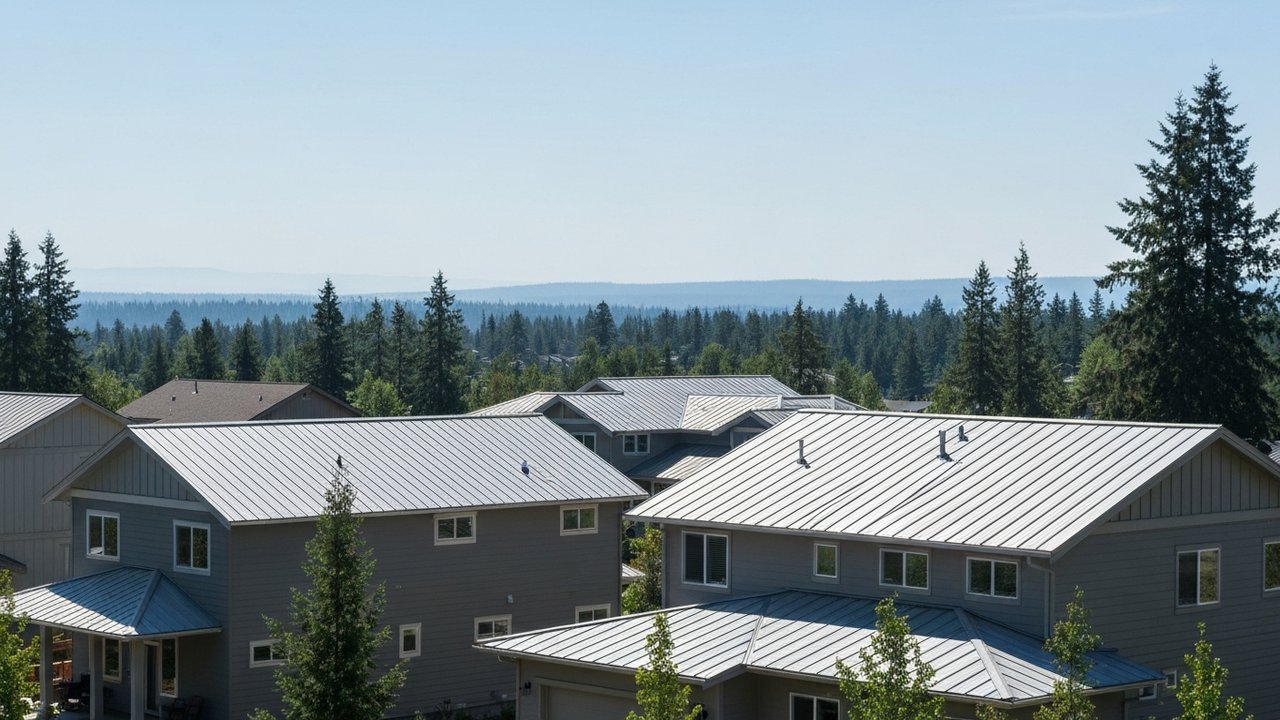
Why embers, not flames, decide most homes
The Insurance Institute for Business and Home Safety has found that the large majority of homes lost in wildfires ignite from embers, not from direct contact with the fire front. Embers travel on the wind, sometimes well ahead of the fire, and they settle wherever there is dry fuel. A roof valley packed with pine needles or an eavestrough full of dry leaves is exactly the kind of fuel they need. Clear those out and you take away one of the most common ways a home catches. FireSmart Canada, the national program at firesmartcanada.ca, makes the same point in its Home Ignition Zone guidance.
British Columbia
The BC interior is the most wildfire-exposed region in the country. Lytton was effectively destroyed on June 30, 2021, when a fast-moving fire wiped out most of the village the day after it set Canada’s all-time heat record of 49.6C. In August 2023 the McDougall Creek fire tore through West Kelowna and across the lake into Kelowna, while the Bush Creek East fire ran through the North Shuswap, hitting Scotch Creek, Celista and Lee Creek hard. Those two fires together became the costliest insured wildfire event in BC history. Kamloops, Vernon, Penticton, Williams Lake and Prince George all sit in high-risk interior terrain. Vancouver Island and the coast were once considered safe, but drought years have made coastal interface risk real there too.
Alberta
Alberta has seen some of the most severe town-level wildfire losses in the country. The 2016 Horse River fire forced the evacuation of about 88,000 people from Fort McMurray and destroyed roughly 2,400 homes and buildings, making it one of Canada’s costliest disasters. In 2011, fire destroyed about a third of Slave Lake. In July 2024, fire swept into the town of Jasper and destroyed 358 of its structures after 25,000 people were evacuated. In spring 2023, Drayton Valley and Edson were both evacuated. Mountain and foothills communities such as Canmore, Hinton and Edson all sit in interface terrain and treat wildfire as a standing risk.
Saskatchewan
Saskatchewan’s wildfire exposure is heaviest across its forested north. In the spring and summer of 2025, fast-moving fires forced the evacuation of La Ronge, Air Ronge and the Lac La Ronge Indian Band, displacing thousands, with Prince Albert serving as a staging point for evacuees moving south. The northern forest communities here face the same interface conditions that drive the worst fires elsewhere.
Manitoba
Manitoba’s worst recent season was 2025, when fire crossing in from Saskatchewan forced the evacuation of about 5,000 people from Flin Flon and nearby communities in late May. By the end of that summer, tens of thousands of northern Manitobans had been displaced. The northern mining and forest towns are where the risk concentrates in this province.
Northwest Territories
In August 2023, a wildfire approaching Yellowknife forced the evacuation of around 20,000 people, nearly the entire city, down a single highway that ran past active fire. Across that season, roughly 7 in 10 NWT residents were displaced at some point. For a territorial capital to face a full evacuation is a stark sign of how far interface risk now reaches into the North.
Nova Scotia
Atlantic Canada is no longer the exception. In late May 2023, the Upper Tantallon fire in the Halifax area destroyed about 150 homes and forced more than 16,000 people out, an unusually destructive interface fire for the province. At the same time, the Barrington Lake fire in Shelburne County grew into the largest wildfire ever recorded in Nova Scotia. Both showed that suburban and rural homes backing onto Maritime forest carry real exposure.
Quebec
Quebec’s record 2023 season pushed fire into communities that rarely faced it. Chibougamau declared a state of emergency and evacuated around 7,300 residents in early June, and rural sectors of Val-d’Or were ordered out as well. The boreal communities of the province’s north and northwest are the ones to watch.
Ontario
Ontario’s direct interface risk sits mainly in the northwest, around Kenora and the boreal communities near the Manitoba border, where evacuations recur in bad seasons. Most of southern Ontario carries much lower direct wildfire risk, though heavy smoke from northern and out-of-province fires has become a regular summer reality.
The roofline steps that apply everywhere
Wherever you live, the protective steps are the same, and they line up with FireSmart Canada’s Home Ignition Zone, the area within about 30 metres of the house:
- Keep the roof and eavestroughs clear of debris. Dry leaves and pine needles in a trough or a roof valley are ready fuel for embers. Clearing them is the single highest-value step.
- Screen the eavestrough with non-combustible metal mesh. A fine metal micro-mesh keeps dry debris from collecting in the trough in the first place, so there is less for an ember to ignite. This is also why coarse plastic screens and foam inserts are the wrong choice here.
- Work the zone right around the house. Move firewood, clear dead vegetation, and keep the immediate area within roughly a metre and a half of the walls free of anything that burns easily.
A quality metal micro-mesh gutter guard does double duty: it ends the seasonal cleaning chore and it keeps the eavestrough from becoming an ember trap. Whether you fit a do-it-yourself metal micro-mesh yourself or have a professional system installed, the principle is the same. If you want to weigh the options, see micro-mesh versus screen versus foam and our take on whether gutter guards are worth it.
How we help
True North Eaves is an independent LeafFilter consultant. We do not impersonate or speak for the manufacturer; we book a free in-home assessment and refer the install. As part of a LeafFilter gutter protection install, your existing eavestroughs are cleared, realigned and sealed, and the fine metal micro-mesh keeps debris out going forward. We do not sell standalone cleaning; clearing the troughs is simply part of fitting the protection properly. For formal wildfire guidance, FireSmart Canada is the authority to follow; we are not affiliated with FireSmart and do not speak for it.
FAQ
Can a gutter guard make my home immune to wildfire? No, and nothing can. A metal micro-mesh guard removes one common ignition point by keeping dry debris out of the eavestrough, which is one part of broader home hardening, not a guarantee.
Why does metal mesh matter for wildfire specifically? Embers need dry fuel to catch. A trough full of dry leaves is ideal fuel. Non-combustible metal mesh keeps that fuel from collecting, and unlike plastic screens or foam inserts, the mesh itself will not melt or burn the way plastic can.
My town is not on this list. Am I safe? Not necessarily. This is a snapshot of communities with recent major fires or known interface risk, not a complete list. If your home backs onto forest, grassland or bush anywhere in Canada, treat the Home Ignition Zone steps as relevant and check FireSmart Canada for local guidance.
Where do I start? Clear your roof and eavestroughs first, since that costs nothing and matters most. Then consider non-combustible metal mesh to keep them clear. You can book a free assessment or see the service areas we cover.
Want this looked at on your own home?
Book a free, no-obligation in-home assessment.
Book my free assessment →