Best Gutter Guards in Canada, Compared
By True North Eaves · Updated June 25, 2026
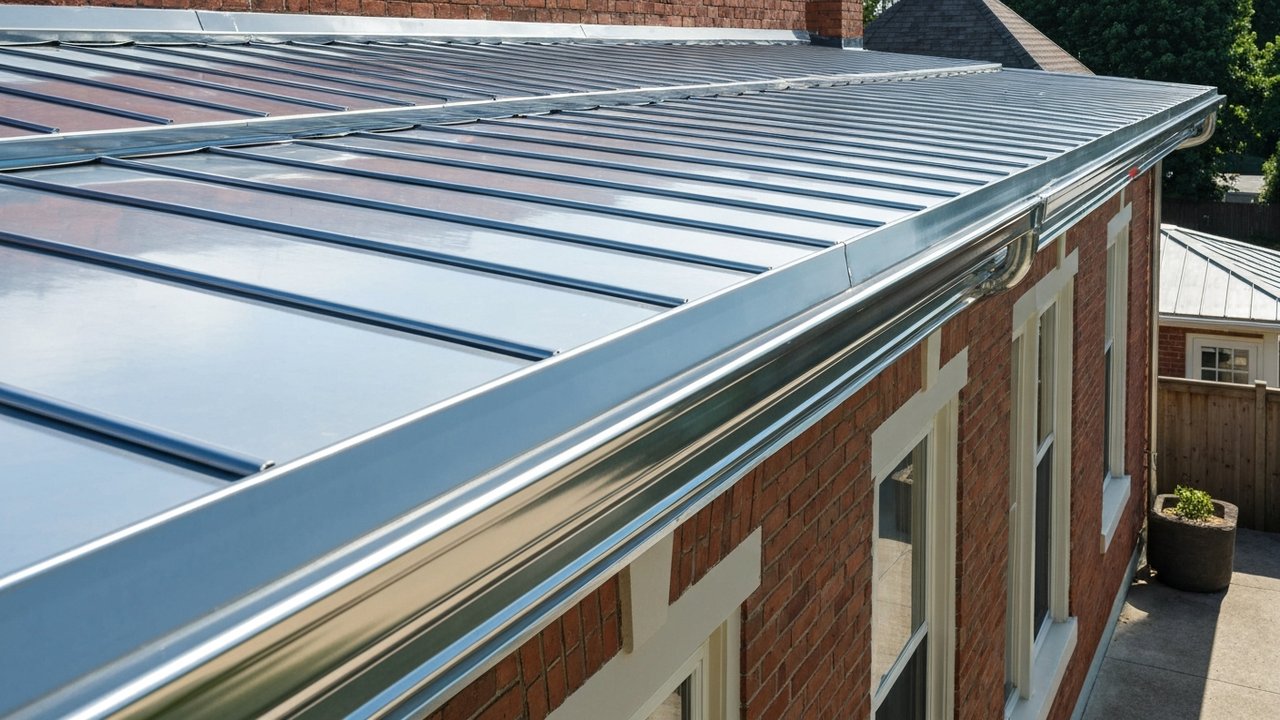
The five types, compared
Most eavestrough guards fall into one of five categories. Here is what each one actually does in practice.
Coarse screens and clip-on mesh. The lowest-cost option. Stamped aluminum or plastic panels that sit over the trough opening and block large debris. They do something: leaves are not sitting directly in the trough. The gaps are too coarse for pine needles, maple seeds, or fine shingle grit, so those still get in. They are also prone to bending, sagging, and popping loose over a Canadian winter. For a home with very few nearby trees, a coarse screen is a modest improvement over nothing. For anyone with conifers or maples close to the roofline, it addresses only part of the problem.
Brush inserts. A stiff bristle cylinder that sits inside the trough. Water is supposed to flow around it while debris sits on top and blows away. In practice, debris catches in the bristles, seeds germinate in them, and the insert becomes a debris trap rather than a debris excluder within a season or two. Like coarse screens, brush inserts sit at the lower end of the guard market.
Foam inserts. A porous foam block that fills the trough cross-section. Water passes through the foam and debris sits on top. Foam is mid-range and does pass water better than brush when new. Over a few years, soil and organic matter work into the porous structure, seeds root in it, and the foam compresses and starts holding water rather than passing it. It is a step up from brush but still carries a maintenance bill.
Reverse-curve systems. A curved hood sits over the trough so water follows the curve and drops into a narrow slot while debris falls off the edge. The engineering is sound: they work well with large flat leaves on a decent pitch. Where they struggle in Canada is with fine needles, which can follow the water curve into the slot, and with freeze-thaw cycles, where a narrow entry point can ice over. Reverse-curve systems tend to sit toward the premium end of the professionally installed market.
Fine stainless micromesh. Openings small enough to block pine needles, maple seeds, and fine grit while passing heavy rainfall. A pitched frame sheds debris off the top rather than letting it accumulate. The inside of the trough stays clean; you may need to rinse the outside mesh every few years as fine pollen builds a film, but there is no digging. Not all products sold as “micro-mesh” perform equally. Some sold at hardware stores have openings two to three times larger than a properly rated guard, and needles still slip through. Stainless steel mesh holds its shape and resists corrosion better than aluminum over the long run. Professional micromesh and reverse-curve systems sit at the higher end of the installed market; quality DIY micromesh panels are a more affordable option within the micromesh category.
Why Canadian conditions narrow the field
A few things about Canadian yards push the lower-tier options out of the running faster than milder climates would.
Conifer debris. Pine, spruce, and fir needles are the hardest debris type for most guards. Only fine micromesh blocks them reliably. If you have conifers within 20 or 30 metres of your roofline, the realistic guard choices narrow to micromesh. Coarse screens, foam, and most reverse-curve systems let needles in or trap them in a way that creates a different maintenance headache down the road.
Maple and ash seeds. The winged samaras that maples release each spring are light, numerous, and buoyant. They sail through coarse screens and germinate in foam and brush. Micromesh stops them at the surface.
Spring melt and heavy runoff. Canadian spring can bring high-flow events, sometimes while partially frozen debris from winter is still in the system. A guard that restricts flow adds overflow risk exactly when the eavestrough needs to work hardest.
Freeze-thaw cycles. Any design with a narrow pooling point risks icing. Reverse-curve systems with tight entry slots are susceptible. Fine micromesh does not create surface pooling, making it less prone to ice-related blockage than the alternatives.
Where LeafFilter fits
LeafFilter installs a fine micromesh guard on a rigid uPVC frame, fitted to the existing eavestrough. As a professional system it sits neither at the cheapest end of the market nor the most expensive: somewhere in the middle, above budget screens and foam but not necessarily the priciest professional system available. What the actual figure works out to for a specific home depends on the size and complexity of the eavestrough system, not on a flat per-home rate. The only honest number comes from a free in-home assessment. The LeafFilter gutter protection page covers the service in more detail, and how much does LeafFilter cost in Canada explains why there is no sticker price and what the assessment actually looks at.
When LeafFilter is installed, the existing eavestroughs are cleaned, realigned, and sealed as part of the installation. The guard goes onto a sound system, not over existing debris and old sealant. We do not offer eavestrough cleaning as a standalone service; cleaning is simply part of installing the guard properly.
DIY versus professional installation
A quality DIY metal micromesh panel is a legitimate choice, especially on a single-storey home with a simple roofline. What you give up is a warranty, the professional cleaning and sealing of the existing troughs before the guard goes on, and the safety of having someone else work at height. For a home where you are comfortable on a ladder and the troughs are already in decent shape, DIY micromesh can be a sound decision. For taller or more complex rooflines, or anyone who wants a warranty and a clean start, professional installation earns its keep.
How to decide
Start with your trees. Count roughly how many are within a few roof-lengths of the house and what species they are. Conifers and maples narrow the realistic options to fine micromesh, either DIY or professional. A largely open yard with infrequent clogs weakens the case for any guard.
Next, think honestly about your roof height and whether cleaning actually gets done each season. A guard is only valuable if the alternative is real: a trough that goes uncleaned or a roof that is genuinely unsafe to work on. The recurring ladder work matters, and how often it actually happens matters.
Finally, check the condition of your existing troughs. If they are sagging, pulling away from the fascia, or failing at the joints, adding a guard is a second conversation. Replacement would come first. See signs you need new eavestrough if you are not sure what shape yours are in.
If you want a straight answer for your specific home, book a free assessment. We look at the trees, the roofline, and the existing troughs and tell you what makes sense, including whether any guard is worth the investment at all.
Frequently asked questions
Which guard type works best in a yard with pine trees? Fine stainless micromesh is the only category that reliably blocks pine needles. Coarse screens, foam, brush, and most reverse-curve systems let needles through or trap them in the trough. If you have conifers within range of your roofline, that is where your search needs to start.
Is a DIY micromesh guard as good as a professionally installed one? A quality DIY metal micromesh panel can perform well on a straightforward single-storey home. Professional installation adds a warranty, ensures the troughs are cleaned and sealed before the guard goes on, and uses proper equipment for taller or more complex rooflines. Which approach makes sense depends on your specific situation and comfort with the work involved.
Do gutter guards prevent ice dams? Not directly. Ice dams form when heat escapes through the roof, melts snow, and the meltwater refreezes at the colder eaves. A clean eavestrough helps water drain rather than pool, but the root cause of ice dams is roof insulation and ventilation, not a blocked trough. A guard that does not create pooling points is less likely to worsen ice conditions, but no guard is a solution to ice dams on its own.
How do I choose between types if I am not sure what debris I get? Walk around the perimeter of your home after a windstorm and look at what has collected in the troughs and on the ground below the roofline. Mostly large leaves? A coarser guard can manage that. Pine needles or maple seeds? You need fine micromesh. If the picture is still unclear, a free in-home assessment looks at your trees, your roofline, and your trough contents and gives you a specific recommendation rather than a general one.
Want this looked at on your own home?
Book a free, no-obligation in-home assessment.
Book my free assessment →