Seamless vs Sectional Eavestrough: Which Is Better?
By True North Eaves · Updated June 18, 2026
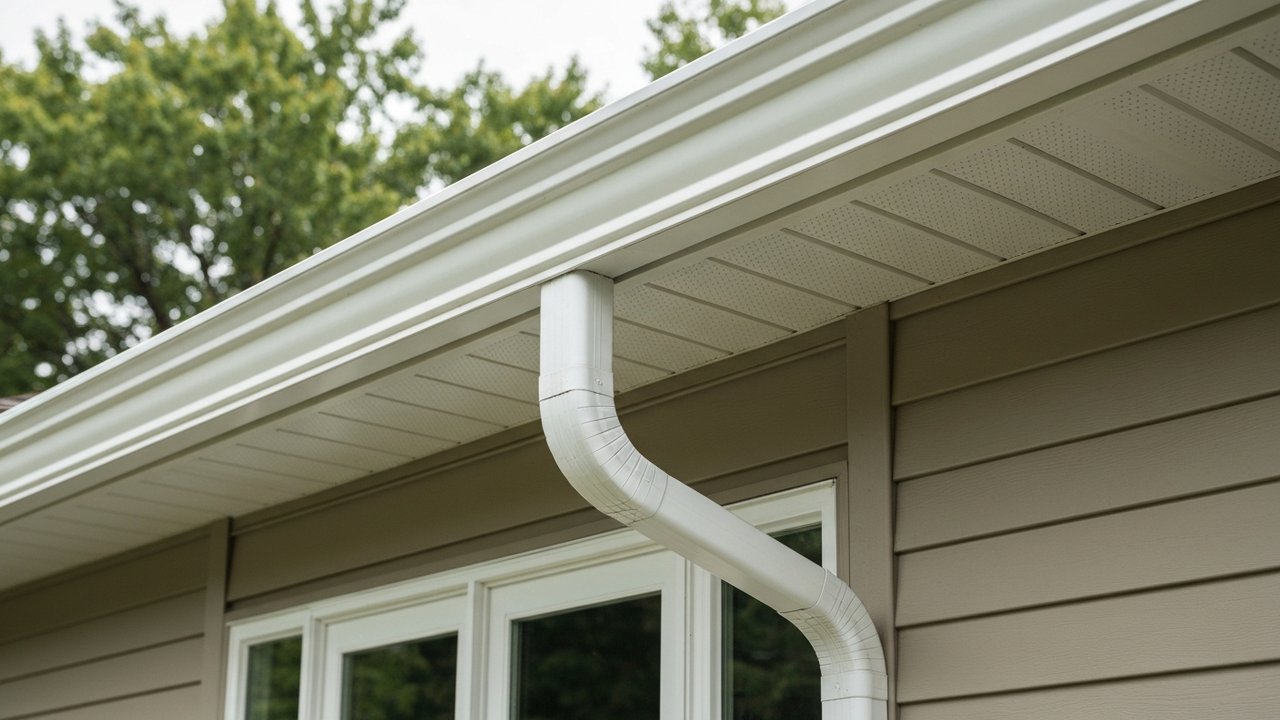
How sectional eavestrough works
Sectional eavestrough comes in pre-cut pieces, usually 10 or 12 feet long, sold off the shelf at hardware stores. You assemble them on-site by overlapping each piece by a few inches and sealing the joint with gutter caulk, sometimes reinforced with a slip connector. The joints run along the entire length of the installation, visible from the ground if you look closely.
This was the standard approach for decades, and it is still how most DIY eavestrough work gets done. The pieces are easy to haul in a truck, cut with tin snips, and hang with standard hardware. For a homeowner patching one damaged section on a weekend, sectional is the practical path.
The trade-off is that every joint is a potential failure point. Sealants flex, but they do not flex indefinitely.
What seamless eavestrough actually means
A seamless eavestrough is fabricated on-site using a roll-forming machine, sometimes called a gutter machine, that travels to the job in a trailer or van. The installer feeds a coil of flat sheet metal into one end, and a continuous trough profile comes out the other, cut to the exact length needed for each run of your roofline.
The result is one uninterrupted piece from corner to corner, or from corner to downspout, with no mid-run joints at all. The only seams in a seamless system are at the mitre joints at corners, the end caps, and the downspout outlets. Those are still sealed and can still eventually fail, but there are far fewer of them than in a sectional installation.
Because the roll-forming machine comes to the job site, seamless installation requires a professional. You cannot buy seamless troughs in 10-foot pieces at a hardware store. This is also why nearly all professional eavestrough contractors use seamless: they already own the equipment, and the results are consistently better.
Why seams fail faster in Canada
In a moderate climate, a well-sealed sectional joint might hold for several years before it starts weeping. In Canada, that timeline compresses.
The failure cycle is predictable. Water from rain or snowmelt finds its way into the small gap at the seam. When temperatures drop, that water freezes and expands, pushing the joint open a fraction of a millimetre. The next melt fills the slightly wider gap, freezes again, pushes it a little further. Each cycle does more work than the last.
Southern Alberta, the Prairies, the Ottawa Valley and Atlantic Canada all see enough freeze-thaw cycling in a single winter to accelerate seam failure significantly. Even in milder coastal British Columbia, the temperature swings between a cold night and a sunny January afternoon run the same cycle repeatedly over a single season.
Seamless eavestroughs are not immune to cold weather. The corner joints still face the same physics. But eliminating the mid-run joints removes the most common failure points from the system.
Materials: aluminum, vinyl, steel and copper
Most seamless eavestroughs in Canada are aluminum, and for good reason. Aluminum handles freeze-thaw cycles without cracking, does not rust, and takes paint well if you want the colour to match your fascia or soffit. It is light enough that a continuous 40-foot run is manageable for an installer working on a ladder.
Sectional systems come in aluminum, vinyl, steel and copper. The vinyl sectional troughs sold at hardware stores are the weakest choice for Canadian conditions specifically. Vinyl becomes brittle in cold temperatures and can crack when ice forms inside the trough or when a heavy snow load bears down on the run. If your winters are hard, vinyl sectional is worth avoiding.
Steel holds up well mechanically but is heavier than aluminum and can rust if the coating is scratched or compromised over time. Copper looks exceptional and lasts a very long time, but it is a specialty product for heritage homes and custom builds, installed by tradespeople with specific experience working with it.
For the typical Canadian home, aluminum seamless is the practical answer. It is what most professional installers put on most houses for a reason.
Where sectional still makes sense
Sectional eavestrough is not wrong, it is just better suited to certain situations.
If one section of your eavestrough is damaged and the rest of the system is in decent shape, a sectional repair can extend the life of that installation without replacing everything. Hardware stores in most Canadian cities carry standard 5-inch K-style aluminum sections, and a handy homeowner can complete the repair in an afternoon.
Sectional also makes sense when bringing a roll-forming crew out is genuinely impractical, such as a very remote property. And if your existing system has an unusual profile that a standard seamless machine cannot match, a custom-cut sectional piece may be the only way to patch it cleanly.
As a full installation choice, though, sectional has largely been replaced by seamless in the professional trade. If you are doing a full eavestrough replacement, specify seamless from the outset rather than accepting sectional by default.
How this ties into gutter protection
If you are considering micromesh gutter protection on top of a replacement, seamless and a good guard system work well together. The continuous surface of a seamless run gives the guard a clean, consistent ledge to sit on, with no raised joint lips to bridge. The protection also goes onto a sound foundation, which matters: capping over a failing sectional system does not fix the underlying problem.
We cover whether gutter protection is the right call for your home in are gutter guards worth it. If you are thinking about both a replacement and LeafFilter gutter protection in the same project, the free in-home assessment covers both, including the condition of your existing troughs, so you know what you are working with before committing to anything. Book a free assessment to get started.
Frequently asked questions
Are seamless eavestroughs structurally stronger than sectional ones? Structurally, they are made from the same aluminum stock, so the material strength is comparable. The practical advantage of seamless is fewer leak points, not a stronger profile. Both can handle normal Canadian snow and ice loads when properly installed with adequate hangers and the right hanger spacing.
Can I install seamless eavestroughs myself? Not without a roll-forming machine, which is specialized commercial equipment. Seamless installation is a professional job by definition. DIY eavestrough work typically means working with sectional pieces from a hardware store, which is a reasonable approach for patches and minor repairs where you are not replacing the whole system.
How long do seamless eavestroughs last? Well-installed aluminum seamless eavestroughs typically last 20 to 30 years with reasonable maintenance. The corner joints and end caps will need resealing at some point, but the mid-run sections themselves have no joints to fail. Actual lifespan depends on the quality of installation, hanger spacing, and how well the downspouts move water clear of the foundation.
What if only part of my eavestrough is failing? Partial replacement is common and often the right call. A professional can roll a seamless section to match the profile of your existing system and replace just the failing portion. If the rest of the system is in sound shape, that approach makes good sense. If it is aging throughout, a full replacement usually saves you from repeated patch visits over the next few years.
Want this looked at on your own home?
Book a free, no-obligation in-home assessment.
Book my free assessment →