Wildfire-Ready Roofline in Kelowna: Eavestroughs, Embers and FireSmart
By True North Eaves · Updated June 19, 2026
Why Kelowna homes face genuine wildfire risk
This is not hypothetical here. In 2026, Kelowna was ranked Canada’s highest overall wildfire-risk city in MyChoice’s national assessment, the only city to land a “very high” rating, driven not by the worst fire weather but by dense wildland-urban interface development, surrounding forest fuel, and a long history of fire (MyChoice, Castanet). That history is recent and severe.
In August 2003, the Okanagan Mountain Park firestorm, started by a lightning strike on August 16, burned more than 250 square kilometres, forced over 27,000 people from their homes, and destroyed 239 homes along the southern edges of the city (Wikipedia, City of Kelowna). Twenty years later, almost to the week, the McDougall Creek fire started near West Kelowna on August 15, 2023, and two days later wind drove it through neighbourhoods and even jumped Okanagan Lake into north Kelowna and Lake Country. It damaged or destroyed 189 structures and caused roughly 480 million dollars in insured losses (CBC, Insurance Bureau of Canada).
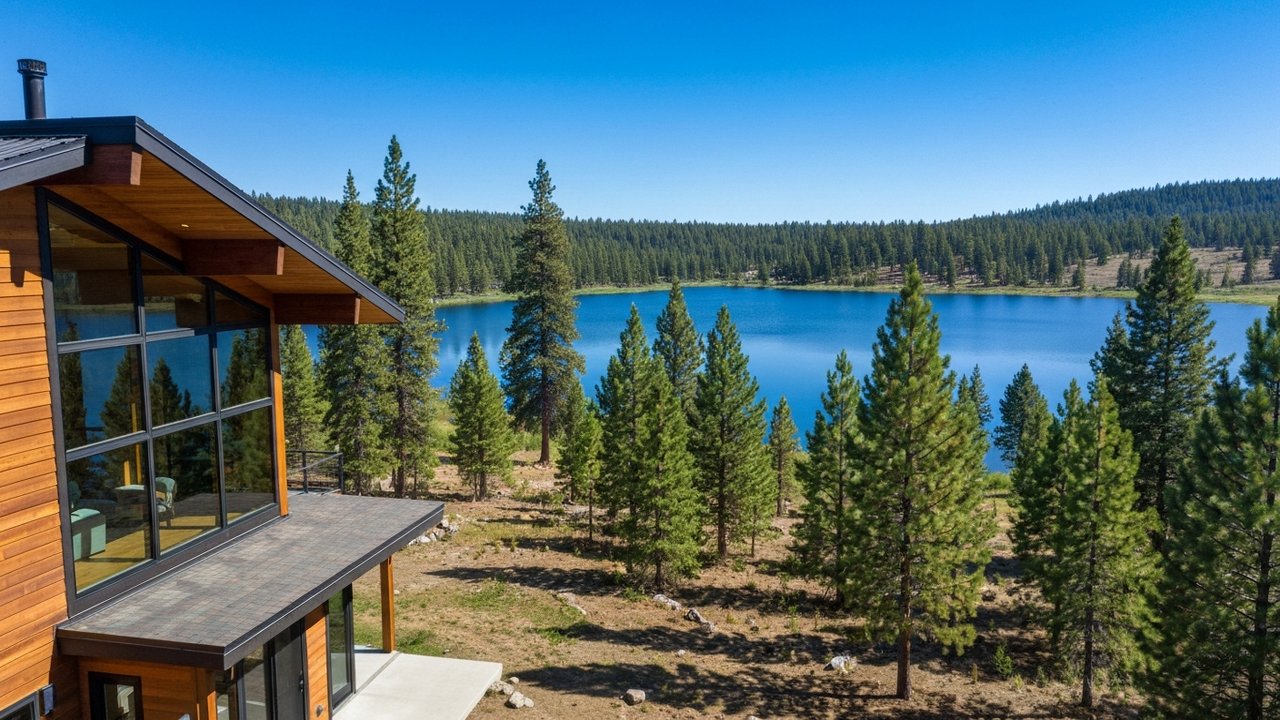
The Okanagan’s combination of hot dry summers, ponderosa pine forest, and homes built up against the hillsides is the recipe that makes embers dangerous. If you live in the Mission, on the slopes of West Kelowna, in Lake Country or anywhere the trees come close to the house, this is your situation.
How a wildfire actually reaches your house
The mental picture most people carry is a wall of flame rolling over a neighbourhood. That happens, but it is not how most homes are lost. FireSmart Canada estimates that around 90 percent of homes damaged or destroyed by wildfire are ignited by embers, the burning debris that wind carries ahead of a fire, sometimes for a long distance (FireSmart Canada, Home Ignition Zone).
Those embers land on roofs, decks, and into eavestroughs. A trough packed with dry ponderosa pine needles and leaf litter is essentially a long tray of kindling running the perimeter of your roof, sitting right against the fascia and the roof edge. An ember that finds it can smoulder, then catch, and the fire works inward from there. This is why the cheapest wildfire work you can do is also some of the most effective, and most of it lives on your roofline.
The Home Ignition Zone, and where the roofline fits
FireSmart organizes everything around the Home Ignition Zone, the area within 30 metres of the house, with the highest priority being the home itself and the first 1.5 metres around it (FireSmart Canada). The guidance starts at the structure and works outward, because hardening the building is what keeps an ember strike from becoming a house fire.
On the roofline, FireSmart’s direction is plain. Regularly remove combustible debris like needles and leaves from the roof and the eavestroughs, and screen your eavestroughs with metal mesh to cut down how much debris can collect in the first place (FireSmart BC). For a property surrounded by conifers, that second step matters because the needles come back constantly through the season, and a trough you cleared in June can be full again by August.
The eavestrough steps that matter most in Kelowna
For an Okanagan home near trees, three things carry most of the weight:
- Keep the roof and eavestroughs clear of needles and leaves. This is the single recommendation FireSmart repeats most, and dry ponderosa pine needles are some of the most flammable litter you can collect. A clear trough is not ember fuel.
- Screen the eavestroughs with fine metal mesh. FireSmart specifically calls for metal mesh because it does not melt or burn the way plastic and foam inserts can, and it keeps needles from rebuilding the debris load between cleanings.
- Do not let the cleaning slide. A trough only helps if it stays clear. On a hillside lot with conifers, the season can refill it faster than most people keep up with from a ladder.
A fitted metal micromesh system addresses the first two together. It excludes needles and grit so the trough stays clear, and the mesh and frame are metal rather than something that melts. If you would rather fit a metal micro-mesh product yourself, that is a legitimate path and it still gets you the FireSmart benefit. The trade-off is the same one in any gutter guard decision: a professional fitted system versus a do-it-yourself part.
Where LeafFilter fits
True North Eaves is an independent LeafFilter consultant. We are not an authorized dealer and we do not install ourselves. What we do is book a free in-home assessment, look at your actual roofline, trees and existing eavestroughs, and tell you honestly what the wildfire and water picture looks like. If a fitted system makes sense, we book it through LeafFilter, and the existing troughs are cleaned out, realigned and sealed as part of that install, so you start clear rather than capping over a season of needles. We do not offer standalone cleaning; clearing the troughs is part of putting the gutter protection on properly.
On price, the honest answer is that LeafFilter is not the most expensive option and not the least. It sits somewhere in the middle, and the only real number comes from the free assessment, since it depends on the size and complexity of your eavestrough system. We never invent a figure over the phone. We also will not pretend any product makes a house immune to fire or promise it will save a home, because no one honestly can. What metal micromesh does is take ember fuel out of your eavestroughs and keep it out, which is exactly what FireSmart asks of that part of the roofline.
To be clear about authority: FireSmart Canada and FireSmart BC (firesmartcanada.ca, firesmartbc.ca) are the experts here, and their free Home Ignition Zone self-assessment is the best starting point for the whole property. We are not FireSmart, not certified by them, and not speaking for them. We simply follow their roofline guidance on the eavestrough side of the work.
FAQ
Does clearing my eavestroughs really reduce wildfire risk? Yes, and FireSmart treats it as a core step. Embers cause roughly 90 percent of home wildfire losses, and a trough full of dry needles is ready fuel right at your roof edge. Keeping it clear removes that fuel.
Will a metal mesh eavestrough screen make my home safe from fire? No, and nobody should tell you it will. Nothing makes a home immune to wildfire. What metal micromesh does is keep needles and debris out of your eavestroughs so they are not collecting ember fuel, which is one specific piece of the broader FireSmart Home Ignition Zone work.
Why metal mesh instead of foam or plastic inserts? FireSmart specifically calls for metal mesh on eavestroughs. Metal does not melt or burn the way plastic and foam can, and foam inserts trap debris rather than excluding it. For an Okanagan home dropping ponderosa pine needles all summer, fine metal micromesh keeps the trough clear over the season.
How do I find out what my Kelowna roofline needs? Start with FireSmart BC’s free self-assessment for the whole property. For the eavestrough side, book a free in-home assessment and we will look at your trees, roof and troughs in person. See the areas we cover.
Want this looked at on your own home?
Book a free, no-obligation in-home assessment.
Book my free assessment →