5 Inch vs 6 Inch Eavestrough: Which Size Do You Need?
By True North Eaves · Updated June 17, 2026
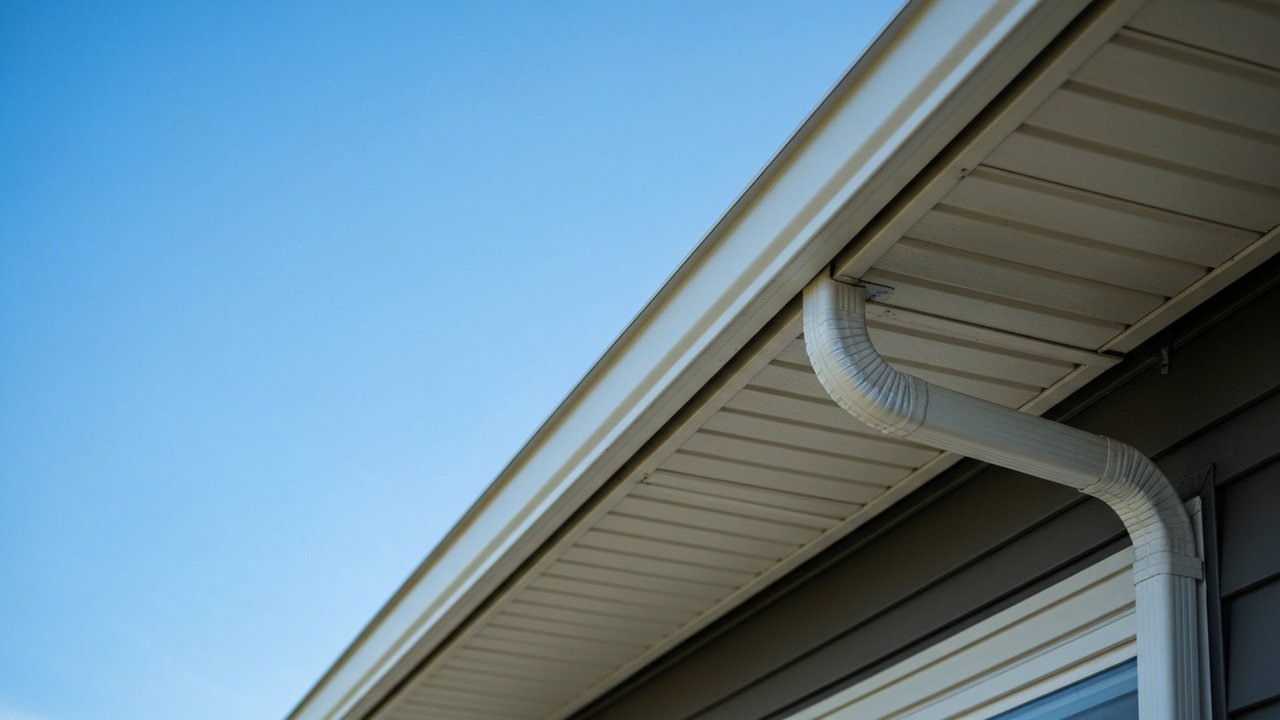
The two sizes and where each is common
Both 5-inch and 6-inch eavestroughs refer to the width of the trough measured across the opening. (You will also see them called gutters, the common American English term, but eavestrough is the standard word across most of Canada.) The dominant profile on Canadian homes is K-style, which has a flat back that sits flush against the fascia board and a decorative ogee curve on the front. Both sizes come in K-style and in half-round, the older rounded profile you see on heritage homes.
Five-inch is the baseline. It is installed on the vast majority of residential homes across Canada and handles typical precipitation without trouble on most rooflines. Six-inch troughs carry roughly 40 percent more water by volume. That extra capacity matters in specific situations, but installing it everywhere it is not needed just oversizes the system for no practical benefit.
When 5-inch is perfectly adequate
For a house with a moderate roof pitch, standard tree coverage, and no unusual drainage patterns, 5-inch is the right size. That describes a lot of the residential housing stock in Alberta, Saskatchewan, Manitoba, and much of Ontario. If your current troughs handle rain without overflowing, the size is working. Most overflow problems in those systems come from clogging or poor slope, not from the trough being too narrow.
Cold climates add a particular wrinkle worth naming. Heavy snowpacks shed fast in spring, and that sudden melt can push a lot of water through the eavestrough in a short window. But the answer to spring melt overflow is usually better slope and downspout placement rather than a wider trough. Upsizing is not the first thing to reach for.
When 6-inch is the right call
A few situations make 6-inch genuinely the better choice.
Steep roof pitch. The steeper the roof, the faster rain accelerates toward the eave. A steep pitch sheds water much more quickly than a shallow one, and the eavestrough has to accept a faster surge. Six-inch handles that surge more reliably and consistently.
Large, unbroken roof planes. A roof with a long uninterrupted run collects more water per metre of eavestrough than a chopped-up roofline with dormers, valleys, and hips breaking up the surface. On large homes with open runs, those sections often benefit from 6-inch.
High-rainfall areas. Parts of coastal British Columbia, particularly the Lower Mainland and Vancouver Island, see rainfall intensity that is higher than most of the rest of Canada. If your home is in one of those neighbourhoods and the existing troughs overflow regularly in heavy rain, upsizing is worth looking at.
Persistent overflow on an otherwise sound system. This is the clearest signal. Properly sloped, unclogged eavestroughs that still overflow are telling you they cannot keep up with the volume. That is a sizing problem, and 6-inch addresses it.
How roof pitch and drainage area drive the math
The two numbers that actually determine how much a trough must handle are the horizontal drainage area (how much roof surface drains to that run) and the roof pitch. Installers use charts combining these variables to confirm sizing.
A useful rule of thumb: for every 100 square feet of roof draining to a section, a 5-inch K-style handles up to about a 6-in-12 pitch without trouble. Steeper than that, or a larger drainage area, and 6-inch starts to make sense. This is why a low-pitch ranch on the prairies almost never needs 6-inch, while a steep-gabled home with a long upper-storey run sometimes does. The roofline tells the story; the size follows from it.
Downspouts matter as much as trough width
Upsizing the trough without checking the downspouts can just move the problem. A 5-inch trough typically pairs with a 2x3-inch downspout. A 6-inch trough needs a 3x4-inch downspout to actually drain at the trough’s capacity. If a contractor suggests going to 6-inch while leaving original 2x3 downspouts in place, that is a gap worth asking about directly.
Downspout placement is just as important as downspout size. Too few downspouts for the length of a run is one of the most common causes of overflow that gets misread as a sizing problem. Adding a downspout at mid-run often fixes the overflow entirely, without changing the trough size at all.
K-style vs half-round: does the profile change things?
K-style is the practical choice for most installations in Canada. Its flat back makes it straightforward to fasten to the fascia board, and the profile is familiar to any eavestrough installer. Half-round is the right choice when the architecture calls for it, typically older homes or custom builds where the rounded look fits the design intent.
One thing to keep in mind: a 5-inch half-round holds somewhat less water than a 5-inch K-style, because the round shape encloses less volume than the K profile does at the same nominal width. If you are replacing original half-round on an older home, your installer may recommend a 6-inch half-round on the heavier-loaded sections to match the capacity of a modern 5-inch K-style.
What to do if you are not sure
Before assuming you need bigger troughs, figure out why the current ones are failing. Clogged downspouts and poor slope cause the majority of overflows. Clean, properly sloped troughs that still overflow are the ones pointing toward a real sizing issue. Starting with a clear-eyed look at what is happening is faster than guessing at the fix.
If you are replacing eavestroughs anyway, the sizing conversation belongs at the beginning of that project, not as an afterthought once material is ordered. An eavestrough replacement starts with understanding what the existing system is doing and what the roofline actually needs. Getting the sizing right the first time saves a lot of trouble later.
Once you have the right trough size sorted, it is worth thinking about whether gutter protection makes sense for your home. Are gutter guards worth it? walks through that decision honestly, including where the value is clear and where it is less compelling.
Book a free assessment and we will look at your roofline, confirm whether your existing troughs are sized right, and tell you what, if anything, needs to change. If LeafFilter gutter protection is part of the conversation, that assessment covers it too.
Frequently asked questions
What size eavestrough is standard on Canadian homes? Five-inch K-style is the most common size on Canadian residential homes built since the 1980s. It handles typical precipitation on moderate-pitch roofs without trouble, which is why it became the default. Six-inch is not rare, but it is the right answer for specific rooflines rather than a universal upgrade.
Can I mix 5-inch and 6-inch on the same house? Yes, and sometimes it makes sense to do exactly that. A steep rear roofline or a long unbroken gable run might warrant 6-inch on those sections while the rest of the house stays at 5-inch. Each section gets sized for what it is draining, not matched to the others for consistency.
My eavestroughs overflow, but only in very heavy rain. Is that a sizing problem? Not necessarily. Most eavestrough systems are designed for typical rainfall, not for extreme weather events. Overflow only during a genuine downpour, while the system handles normal rain fine, often means you are at the edge of normal performance rather than facing an undersized system. Overflow during moderate rain is the clearer sign that something is wrong, whether that is clogging, poor slope, or actual undersizing.
How are eavestrough sizes measured and fabricated? The dimension refers to the width across the top opening of the trough. Aluminum eavestroughs, which are by far the most common material on Canadian homes, are typically fabricated on-site from coil stock using a portable roll-forming machine. The installer arrives with raw material and forms continuous lengths cut exactly to your roofline, which eliminates the seams that are common failure points on older sectional systems.
Want this looked at on your own home?
Book a free, no-obligation in-home assessment.
Book my free assessment →