Fascia vs Soffit: What's the Difference?
By True North Eaves · Updated June 19, 2026
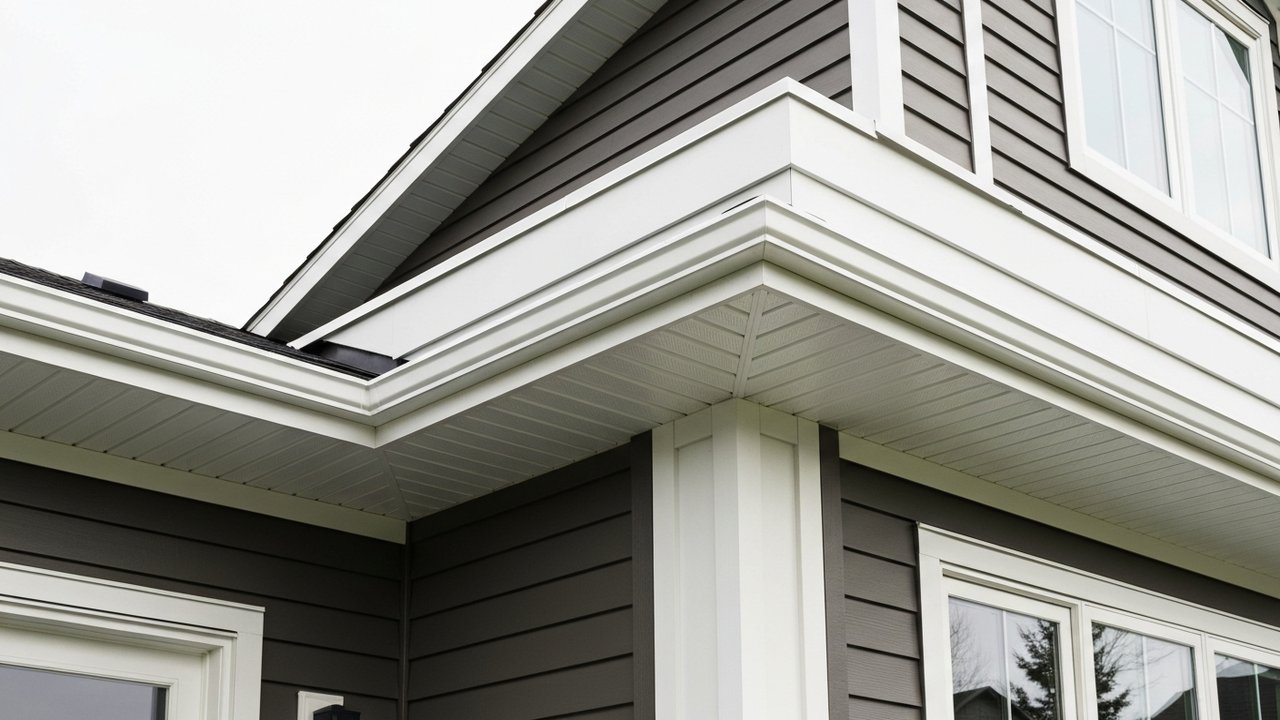
What fascia does
The fascia board runs horizontally along the bottom edge of your roof, capping the ends of the rafters. It has two jobs. First, it gives your eavestrough (sometimes called a gutter) a surface to attach to. The eavestrough hangs from spikes or brackets driven into the fascia, so when that board is soft or rotten, the eavestrough has nothing to hold it and starts to lean out or pull away. Second, fascia closes off the gap where the rafters meet the roofline, keeping weather, insects and small animals out of what would otherwise be an open cavity.
Most fascia in Canadian residential construction is aluminium or vinyl, but older homes often have wood fascia underneath. Wood is the one that rots. Wrapping original wood fascia in aluminium capping has become common across Canada because aluminium handles freeze-thaw cycles well and does not need painting every few years to stay intact.
What soffit does
Soffit fills the underside of the eave overhang, the horizontal surface you see when you look up at the bottom of the roof edge. It is usually perforated or vented. Those vents matter more than most homeowners realize: they allow outside air to circulate into the attic from below, which works with ridge venting to keep attic air moving year-round. Without that airflow, moisture accumulates in the attic in winter and heat builds up in summer, both of which shorten the life of your roof deck and insulation.
Soffit also closes off the eave from pests. A missing or deteriorating soffit panel is one of the most common entry points for wasps, hornets, squirrels and starlings in Canadian homes. Once they are in, removing them is a much harder problem than a panel replacement. Blocking the opening early is the sensible move.
How they work together
Fascia and soffit are related but not interchangeable. Think of it this way: the fascia is the vertical face of the eave, and the soffit is the ceiling of the overhang. They meet at a corner, and together they enclose the roof eave into a tidy, finished surface that sheds water and keeps pests out.
The eavestrough connects to all of this at the fascia. Water off the roof hits the eavestrough, which is mounted to the fascia, and runs toward the downspouts. If the fascia has rotted or pulled away, the eavestrough loses its pitch and water pools instead of draining. That pooled water then overflows and often ends up running down the wall and collecting at the foundation. The soffit sits just inward of the eavestrough on the underside of the overhang. Its condition does not affect drainage directly, but it affects both the ventilation of the roof assembly above and the overall integrity of the eave.
Getting one right without checking the other misses half the picture, which is why a thorough inspection of the roofline looks at both together.
Signs of trouble to watch for
Fascia:
- The eavestrough is visibly sagging, pulling away from the roofline, or no longer runs at a consistent angle
- Paint peeling or bubbling in a band along the top of the exterior wall
- The board feels soft when pressed; rot can hide under aluminium capping, so check the ends where water tends to sit
- Water staining on the exterior wall directly below the roofline
- Visible rust or streaking running down from the eavestrough mounting points
Soffit:
- Visible holes, cracks or panels that have come loose
- Discolouration or staining on the underside of the eave, which can point to moisture coming from above
- Unexplained pest activity along the roofline, especially wasps building nests or birds disappearing into the eave
- Higher than usual attic temperatures in summer, or excessive frost on the underside of the roof deck in winter
Catching either problem early keeps a manageable repair from becoming a structural one. Both fascia and soffit failures tend to get worse with each freeze-thaw cycle rather than stabilizing on their own.
What they are made of
In Canadian residential construction, the main material choices are:
Aluminium: The standard choice for both fascia and soffit. It does not rot, handles wide temperature swings without warping, and is available in a range of colours to match existing trim. Aluminium soffit panels come in solid and vented versions; most homes use a mix.
Vinyl (PVC): Common in milder climates but can become brittle in sustained cold, which matters in the Prairies, northern Ontario and most of the country from November to March. It is generally the lower-cost option and performs well where temperatures are less extreme.
Wood: The original material on older homes and still used on heritage or custom builds. It looks good when maintained but requires regular painting and is vulnerable to rot in the wet conditions that come with Canadian shoulder seasons. Most people choose to cap or replace wood fascia and soffit when it starts to show age rather than continuing to repaint and patch.
Steel: Less common in residential work but used in some commercial applications and high-end projects where maximum durability is the priority.
When to repair or replace
Not every problem needs a full replacement. A single loose soffit panel can often be refastened. A small section of rotted fascia can be cut out and spliced. But if the rot is widespread or the underlying rafter ends are damaged, a more thorough approach through fascia repair or replacement or soffit repair or replacement makes more sense than patching section by section.
The condition of your eavestroughs factors into the decision too. If the troughs themselves are near the end of their life, addressing the fascia at the same time is practical because the eavestrough has to come off to access the board anyway. Doing the work in a single visit is more efficient than two separate jobs at roofline height.
If you are unsure what you are looking at or how far the problem runs, a free in-home assessment covers the whole roofline rather than one component in isolation. Book a free assessment and we will tell you plainly what we find.
How fascia and soffit connect to your eavestroughs
If your eavestroughs are not draining right or are visibly pulling away from the house, the fascia is worth checking before you assume the eavestroughs themselves are the problem. A sagging eavestrough is very often a symptom of fascia that has softened or lost its attachment, not a failed trough.
The reverse is also true. If you are considering gutter protection, damaged fascia can undermine the installation. A micromesh system gets secured to the eavestrough, which in turn relies on solid fascia to stay properly positioned and pitched. We look at the full picture during an assessment and are direct about what needs to happen and in what order. If you are still trying to figure out whether your eavestroughs are salvageable or due for replacement, signs you need new eavestroughs is a practical starting point.
Frequently asked questions
What is the difference between fascia and soffit? Fascia is the vertical board running along the lower edge of the roofline, directly behind the eavestrough. Soffit is the horizontal surface underneath the eave overhang, typically vented to allow air into the attic. Fascia supports the eavestrough; soffit closes in the underside of the eave and manages airflow.
Can I tell if my fascia is rotting without removing the eavestrough? Sometimes. Paint peeling along the roofline and a sagging or outward-leaning eavestrough are the most visible signs from the ground. The most accurate read is pulling the eavestrough away and pressing on the board directly, which is part of what an in-home roofline assessment checks.
Do I need to replace fascia and soffit at the same time? Not necessarily. They are separate components and can be done independently if only one is failing. That said, if both are in poor condition, doing them together reduces the number of times you are working at roofline height and produces a more consistent finished result.
How do I know if my soffit vents are blocked? Above-average attic heat in summer, frost on the underside of the roof deck in winter, or visible debris and nesting material in the perforations are the main clues. A look from the ground with binoculars can often tell you whether the soffit surface is intact and whether the vent perforations look clear or packed with material.
Want this looked at on your own home?
Book a free, no-obligation in-home assessment.
Book my free assessment →