Fascia Board Replacement Cost in Canada
By True North Eaves · Updated June 25, 2026
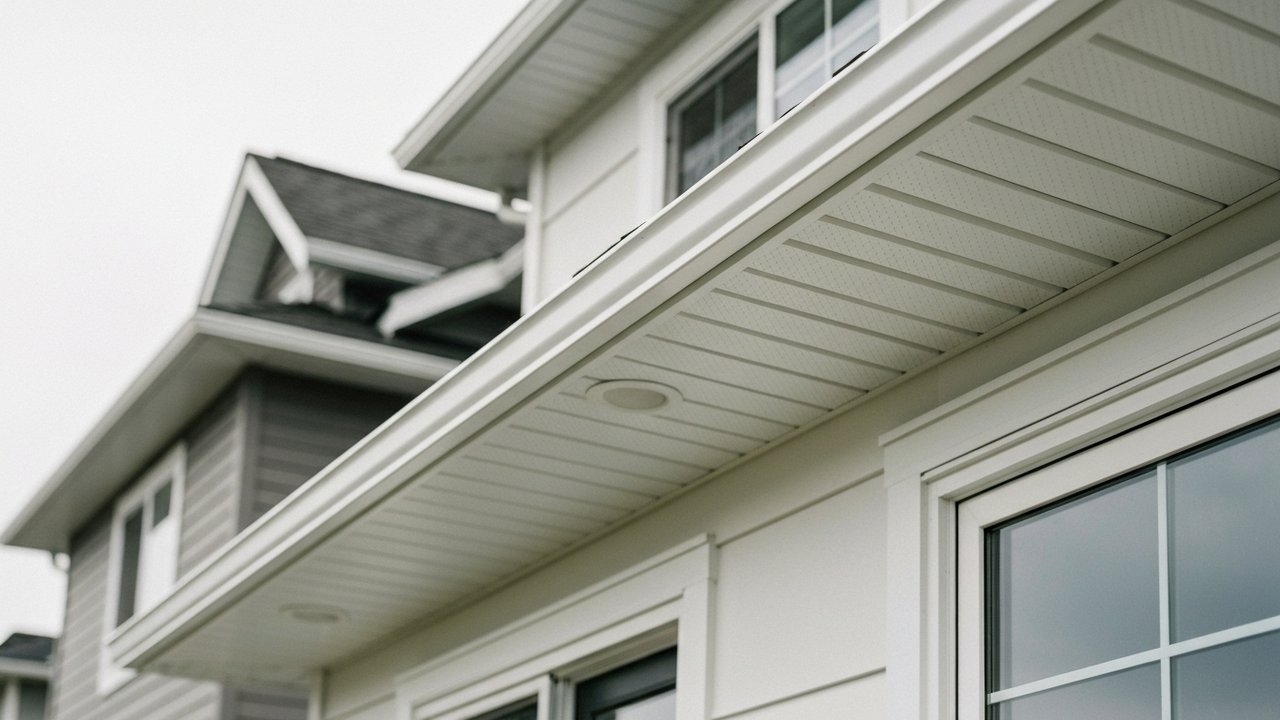
What fascia is and why it matters
Fascia is the vertical board that runs along the lower edge of your roofline, directly behind the eavestrough (what many people call a gutter). It closes off the open ends of the rafters and gives the eavestrough a solid surface to hang from. That sounds like a secondary role, but it is load-bearing in a practical sense: when fascia fails, the trough goes with it. A rotting or pulling board lets water get behind the trough and soak into the rafter tails, the wall sheathing and eventually the interior framing. What starts as a board swap can become a structural repair if the rot has had seasons to spread.
Signs your fascia needs replacing
You can spot the early signs from the ground, which is worth doing before winter freezes compound the problem.
- Paint that is bubbling or peeling in sheets. Flaking paint at joints or edges can sometimes be addressed with prep and repainting. Paint lifting in large patches or bubbling away from the face of the board usually means moisture is already in the wood underneath.
- Visible softness, cracks or holes. If you can get a screwdriver on it, probe any suspicious area. Sound wood pushes back. Rotted wood gives.
- Eavestroughs that are sagging, pulling away or running visibly out of level. The trough hangs from the fascia. If the trough has moved, the board behind it is likely the reason.
- Dark staining on the siding below the roofline. Overflow that gets behind the trough tends to leave a streak on the wall below. It points to water that has been sitting where it should not be.
The earlier you catch this, the more contained the repair stays. For a deeper look at what drives this kind of failure, what causes fascia rot covers the main culprits.
What drives the scope of the job
Two things govern most fascia jobs: how much board needs replacing and what condition the structure behind it is in when the old board comes off.
Linear footage. A home with a simple rectangular roofline has far less perimeter fascia than a home with dormers, multiple roof sections and a complex run of trim. More fascia means more material and more labour, so the perimeter of your specific home matters.
Storey and access. Working at a single-storey height is straightforward. Two or three storeys requires more equipment and more setup time. Sections of roofline that are hard to reach because of decks, additions or landscaping add to the job as well.
Condition behind the board. Fascia that has rotted through into the rafter tails turns a simple board replacement into carpentry work on the structural framing. Sometimes the rot is contained entirely to the fascia itself. Sometimes it has gone further. You cannot know until the old board comes off, which is why an in-person look matters before any quote is valid.
Eavestrough work. The eavestroughs (gutters) come off for the fascia to be replaced, and then they either go back on or get replaced at the same time. If your troughs are already old or failing, reinstalling them onto fresh fascia and revisiting the roofline in another few years is a reasonable thing to want to avoid.
For fascia replacement, a free in-home assessment looks at all of these factors rather than quoting on a per-foot basis over the phone, because a metre of fascia on a one-storey home with solid framing behind it is a completely different job than a metre on a two-storey with rot that has spread into the rafter tails.
Material options and how they compare
Three materials account for most residential fascia in Canada: wood, aluminum and vinyl. Engineered wood composites are a fourth option worth knowing about on the right home.
Wood is the traditional choice and still common, especially on older homes where matching existing trim profiles matters. It looks right when properly installed and painted. The tradeoff is ongoing maintenance: wood needs repainting on a regular cycle, and if painting falls behind or the eavestrough holds water against it, rot follows. In wet coastal climates like much of British Columbia, untreated or poorly sealed wood fails faster.
Aluminum sits in the middle of the material range and is the most common choice in new residential construction across Canada. It does not rot, holds paint well and is widely available in prefinished colours that require little maintenance. It handles the temperature swings you get in Alberta, Saskatchewan and Manitoba better than vinyl does.
Vinyl is on the lower end of the material scale for fascia specifically. It is inexpensive to buy and easy to install, but it expands and contracts more than aluminum with wide temperature swings. In climates with extreme winter-to-summer ranges, that movement can open gaps at seams over time. It works, but it is not always the first recommendation in Prairie or northern climates.
Engineered wood composites and fibre cement products lean toward the premium end. They are dimensionally stable, take paint well and are substantially more rot-resistant than natural wood. They are heavier and cost more upfront, but on a home where longevity and aesthetics both matter, they hold up well and do not require the paint cycle that natural wood does.
The eavestrough connection
Fascia replacement almost always brings the eavestroughs along with it, since the trough has to come off to access the board behind it. That makes the timing useful: if your eavestroughs are already worn, leaking or undersized, it makes sense to address everything while the roofline is already being worked on rather than reinstalling old hardware and coming back in a few years.
Eavestrough replacement and fascia work are done together for this reason on many jobs, and the combined approach often produces a better result than piecemeal repairs.
If you are putting fresh fascia and new eavestroughs on a home, gutter protection is worth thinking about. New fascia rots again if the eavestrough overflows against it. A quality micromesh system keeps the trough draining rather than holding water at the fascia face, which protects the work you just paid for. Whether that makes sense for your home depends on your trees, your roofline and what the assessment turns up.
Professional installation versus doing it yourself
Replacing a few accessible boards on a single-storey home is within reach of a capable DIYer. You need a ladder, a pry bar, a saw and appropriate fasteners, and the key is getting the new board flat and tight against the rafter tails before the eavestrough goes back on.
The equation changes once rot has spread into the framing, once you are working above the first storey, or once the roofline is complex enough that access becomes the real challenge. Rot that looks contained from the outside sometimes turns out to be more extensive once the old board comes off, and knowing when to stop and call in a carpenter is not always obvious to someone without roofing experience.
What we typically see when doing assessments: homeowners who handled the accessible lower sections themselves but called for help on the high runs, the sections with complex trim details, or wherever probing revealed that the rot had gone into the framing.
Frequently asked questions
How do I know if my fascia needs replacing or just repainting? Press firmly on the face of the board. Sound wood pushes back. If the board flexes or feels spongy, the wood underneath is already compromised and paint will not fix it. If the wood is firm and the paint is peeling only at joints or cut edges, a proper prep-and-repaint job may buy you several more seasons. When you are not sure, get someone up there to probe the suspicious sections before assuming paint is the answer.
Does fascia replacement include the eavestroughs? Not automatically, but the two are connected because the eavestrough has to come off to replace the fascia behind it. Most contractors assess the troughs at the same time and advise whether they go back on or get replaced. If the troughs are sound, they go back on. If they are failing, handling everything in one visit avoids coming back to the same roofline again in a few years.
What happens if I leave rotting fascia alone? The rot spreads. From the fascia board, it moves into the rafter tails and the wall sheathing behind. A board replacement becomes a framing repair. Leaving it through one or two winters also means the eavestrough is hanging from compromised wood, which can pull the whole trough away from the house and dump overflow water against your siding and foundation rather than routing it safely to the downspouts.
How do I get an accurate quote for fascia work in Canada? The only way to get a real number is to have someone look at your roofline in person. The variables that matter most (how much board, how many storeys, what condition the framing behind the old board is in, whether the eavestroughs need to go too) cannot be answered from a contact form. Book a free in-home assessment and get a written quote based on what your home actually needs.
Want this looked at on your own home?
Book a free, no-obligation in-home assessment.
Book my free assessment →