Composite vs Wood Fascia Board: Which Lasts Longer?
By True North Eaves · Updated June 26, 2026
What fascia actually does
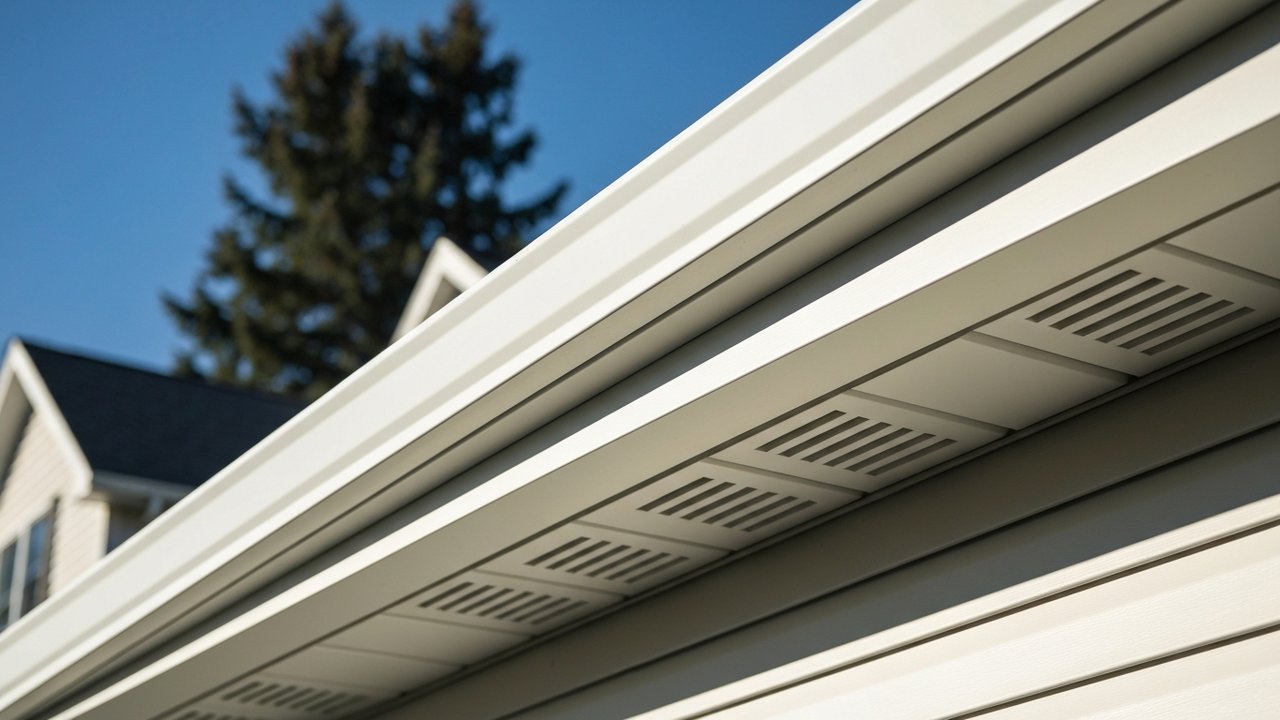
The fascia board runs along the lowest edge of the roof, directly behind the eavestrough. It is what the eavestrough mounts to. When it fails, the trough loses its anchor, pulls away from the wall, and stops routing water where it belongs. A soft fascia board is also a common entry point for pests: carpenter ants and wasps both exploit gaps that open when wood shrinks and the paint cracks.
Beyond structure, the fascia is visible from the street. It is part of the first impression your home makes, and when it looks weathered or warped, the whole roofline looks neglected. The material choice matters both for longevity and for how much upkeep you will be doing ten years from now.
Wood fascia: the traditional choice
Most homes built before the late 1990s have wood fascia, typically spruce or pine in a 1x6 or 1x8 profile. Wood is easy to work with, accepts paint well, and fits the character of older homes naturally. A well-painted, well-maintained wood fascia board can last a long time.
The trouble starts when paint maintenance falls behind. Wood expands and contracts with temperature, and over time the paint film cracks. Water enters through those cracks and the board begins to soften. Once wood is repeatedly wetted and dried, it decays from the inside. By the time the outside feels spongy when you press it, rot has often travelled further along the board than the surface suggests.
A leaking or overflowing eavestrough speeds this up considerably. Water cascading over the front lip of a clogged trough runs directly behind the fascia board. That single source of recurring moisture is one of the most consistent causes of early fascia failure, especially at valleys and around downspout connections. If you are curious about the full pattern, what causes fascia rot walks through how this typically progresses.
Composite fascia: what “composite” actually means
“Composite” is an umbrella term that covers several distinct products. It helps to know what each one actually is.
Cellular PVC is extruded from PVC foam throughout. It does not absorb water, cannot rot, and holds paint without the moisture movement that eventually cracks paint on wood. It is lighter than wood and easy to cut on site. The one installation note is that PVC expands more than wood in heat, so seams need expansion gaps to prevent buckling.
Fibre cement (James Hardie and similar products) combines Portland cement with cellulose fibre. It is harder and more impact-resistant than cellular PVC, takes paint very well, and provides nothing for insects or fungus to consume. It is heavier and more brittle than PVC, so proper fastening matters.
Engineered wood composite (LP SmartTrim and similar) bonds wood fibre under pressure with a polymer resin and a factory-primed overlay. It performs better than dimensional lumber in wet conditions but still requires periodic repainting and is not the same as a fully inorganic product like fibre cement or cellular PVC.
Most residential replacement work in Canada leans toward cellular PVC or fibre cement. Both address the rot problem rather than just slowing it down.
What actually kills fascia boards
To understand which material lasts, it helps to name what the enemies are:
- Moisture: from rain and snow, condensation on the underside, or a leaking eavestrough joint above
- Temperature cycling: repeated expansion and contraction that opens paint seams over several winters
- UV exposure: south- and west-facing fascia takes the most sun and tends to show paint failure first
- Pests: carpenter ants, wasps, and squirrels that find soft wood inviting
Composite materials, cellular PVC and fibre cement in particular, address the first two directly. They do not absorb moisture and are far less affected by expansion stress. Neither provides a food source for insects or fungus. Against UV, both hold colour well, though a painted surface on either material will eventually need refreshing just as it would on any exterior product.
Wood remains competitive only with consistent upkeep. If your painting schedule is reliable every five to seven years, and your eavestroughs are clear and not overflowing, wood fascia can hold up for a long time. The majority of early failures trace back to a combination of deferred paint maintenance and a clogged eavestrough above, not to wood being inherently fragile.
Canadian climate considerations
Canada’s climate is particularly hard on painted wood because of the freeze-thaw cycle. Water works its way into a hairline paint crack in late autumn, freezes, expands, and widens the crack. By spring, the opening is large enough to admit liquid water during the first thaw. Repeated over five or ten winters, this mechanical process works open the wood surface even before visible rot appears.
This matters more in high-cycle regions: coastal BC, the Great Lakes area, and the Prairie foothills. A Calgary home can go through a dozen freeze-thaw events in a single winter during chinook cycles. Even in regions with colder, more stable winters, wood fascia is not immune. Composite is simply less vulnerable to this mechanism because there is no paint film for ice to lever open and no wood fibre for moisture to saturate.
Which one should you choose?
For a replacement, composite is the practical default for most Canadian homeowners today. Cellular PVC suits wet or shaded rooflines well and comes in factory colour options that do not require repainting on any schedule. Fibre cement suits anyone who wants a harder surface, strong paint adhesion, and better resistance to physical impact.
Wood still makes sense in a few situations: heritage homes where the profile needs to match existing millwork, or where the existing fascia is structurally sound and just needs a fresh coat of paint. A qualified fascia contractor will give you an honest read on whether the boards can be saved or need to come down.
One practical point worth noting: if the fascia is coming down, it is a natural time to look at the eavestrough condition as well. New fascia installed behind a failing or sagging trough will be exposed to the same water problems that damaged the old board. Having both assessed together lets you make a clear decision about what actually needs to go and what can stay. If your troughs are aging, an eavestrough replacement assessment at the same visit saves you from opening the work a second time.
When it is time to replace
Signs that the fascia needs attention:
- Paint peeling, cracking, or showing dark water marks along the board
- The surface sounds hollow or feels soft when you tap or press it
- The eavestrough is pulling away from the wall, which often means the fascia behind it has softened
- Visible discolouration or mould on the outer face
- Gaps opening between the fascia and the soffit above
If you see this on one section, check the adjacent runs. Rot does not stop at corners or seams. If you are unsure whether your fascia can be saved or needs replacing, book a free assessment and we will look at the full roofline, including the eavestroughs and soffit, at the same visit.
Frequently asked questions
How much longer does composite fascia last than wood? There is no single number, since both materials depend heavily on installation quality and what the roofline throws at them. Properly installed cellular PVC or fibre cement can perform for several decades with minimal attention. Wood fascia on a consistent painting schedule can reach that range too, but the window for error is narrower. In Canadian freeze-thaw conditions, composite tends to hold up noticeably better over time when maintenance is anything less than diligent.
Can composite fascia be painted to match my trim? Yes. Cellular PVC takes exterior latex paint well and holds it without the moisture movement that eventually loosens paint on wood. Fibre cement is factory-primed and designed to be painted. Both give you the colour flexibility to match existing trim and soffits.
Does the fascia material affect how eavestroughs are installed? Mostly no. Eavestroughs are mounted to the fascia board regardless of material. Cellular PVC is slightly more forgiving for bracket installation because it will not split under a screw. Fibre cement benefits from a pre-drilled pilot hole. A qualified installer handles either without issue.
If my fascia is rotting, should I also replace the eavestroughs? Not always, but it is worth evaluating them at the same time. If the eavestrough was the source of the moisture that damaged the fascia, and it is still leaking or overflowing, new fascia will face the same conditions. Having both assessed together lets you make a clear decision about what needs to go and what can stay, rather than finding out later that one job created the other.
Want this looked at on your own home?
Book a free, no-obligation in-home assessment.
Book my free assessment →