Jasper and Wildfire: Protecting Your Roofline as the Community Rebuilds
By True North Eaves · Updated June 19, 2026
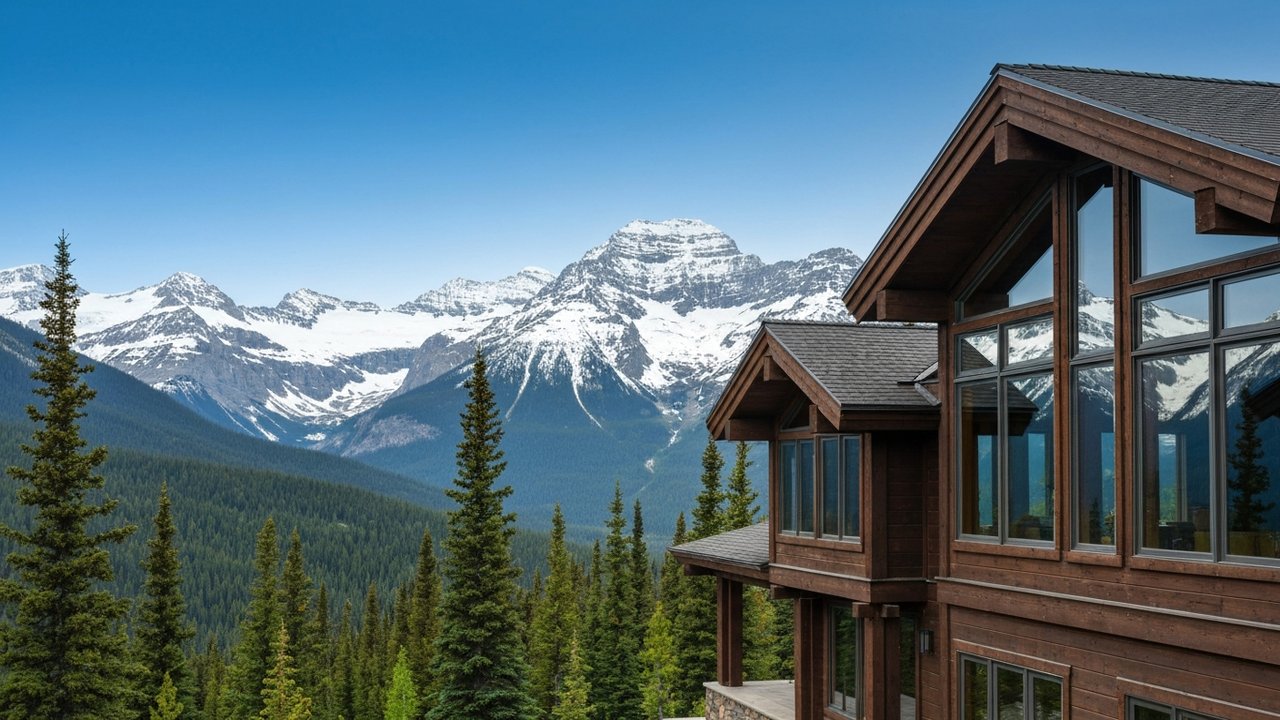
Why embers, not flames, decide most homes
When people picture a town fire they picture a fire front. The reality FireSmart teaches is quieter and more important. Wind carries burning embers well ahead of the main fire, sometimes more than a kilometre, and those embers rain down on roofs, decks and eavestroughs. If an ember lands on a non-combustible surface it usually burns out. If it lands in a trough full of dry pine needles, it can smoulder and then ignite the fascia and roof edge. That is why FireSmart Canada notes that embers alone account for up to 90 percent of homes ignited in a wildfire (FireSmart BC). For a mountain-park town surrounded by lodgepole pine and spruce, the eavestrough is one of the most overlooked ember traps on the whole house.
The Home Ignition Zone starts at your roof
FireSmart organizes everything around the Home Ignition Zone, the area extending out to about 30 metres from the house, with the most critical work in the Immediate Zone within 1.5 metres of the walls (FireSmart Canada). Your roof and roofline sit at the heart of that zone. FireSmart Alberta calls the roof the most vulnerable part of a home, because sparks and embers can ignite either flammable roofing or any debris that has collected there (FireSmart Alberta). Two roofline jobs matter most: keep it clear of fuel, and remove the gaps and surfaces where embers settle.
Keep the roof and eavestrough clear of debris
The single most impactful and lowest-cost step is also the simplest. FireSmart guidance is to regularly clean gutters and rooftops to remove leaves, twigs, branches and other vegetation, all of which are highly combustible (FireSmart BC). A trough packed with last autumn’s needles is a ready-made ember bed running the entire perimeter of your roof. If you are physically clearing your eavestroughs every season, that work has fire-season value beyond just stopping overflow. We do not offer standalone cleaning, but when a LeafFilter gutter-protection system goes on, the existing eavestroughs are cleaned, realigned and sealed first, so the system starts sound rather than capping over a season of fuel.
Screen the eavestrough with metal mesh
FireSmart Canada’s fact sheet on gutters, eaves and vents recommends non-combustible leaf guards over eavestroughs, specifically metal-mesh screens, which both limit combustible debris buildup and create a non-combustible surface at the gutter line (FireSmart Canada gutters fact sheet). FireSmart also recommends metal eavestroughs over plastic in fire-prone areas, and fire-safety groups specifically discourage foam gutter inserts. There are two honest routes here. A do-it-yourself stainless or aluminum micro-mesh from a hardware store is a legitimate way to put metal screening over your trough. Or a professionally fitted micro-mesh system like LeafFilter does the same job as a permanent, warranted install. Both keep needles and leaves out so the trough cannot become an ember bed, and both put a metal surface where embers used to settle. We are independent LeafFilter consultants, not an authorized dealer, and we will tell you plainly that the DIY route is real if that suits your home better.
Fire-resistant materials at the roof edge
Embers also exploit the soffit, fascia and vents along the roof edge. FireSmart recommends closed eaves and screening vents with fine metal mesh, generally around three millimetres, so embers cannot wash up under the roof (FireSmart Canada gutters fact sheet). If you are repairing or rebuilding, that is the moment to choose non-combustible or fire-resistant materials at the roofline. Metal eavestrough, well-sealed fascia and closed, screened soffit all reduce the openings and surfaces an ember can use. None of this makes a home immune, and no honest installer would tell you otherwise, but each step removes one more easy path for an ember to find fuel.
Rebuilding more resilient
Jasper is rebuilding, and many homeowners across Alberta are looking at their own rooflines with new eyes. If you are repairing fire-season vulnerabilities or starting fresh, the roofline is one of the most achievable parts to harden, and much of it overlaps with work that protects against overflow, ice and rot year-round. We come out, look at your roof, eavestroughs, fascia and soffit, and give you a straight read on what would actually reduce risk for your home, with no pressure and no pretending any product is a guarantee. See the service areas we cover, or book a free assessment when you are ready.
FAQ
Can gutter guards really help with wildfire risk? They address one specific risk: debris in the eavestrough that an ember can ignite. FireSmart recommends non-combustible metal-mesh leaf guards because they keep leaves and needles out and put a metal surface at the gutter line. They are one layer of protection, not a guarantee, and the guard surface itself should still be kept clear of accumulated debris.
Is LeafFilter expensive for fire hardening? LeafFilter is not the most expensive gutter protection and not the least; it sits somewhere in the middle. The real number for your home comes only from a free in-home assessment, since it depends on the size and layout of your eavestrough system. A do-it-yourself metal micro-mesh is a legitimate lower-cost route if that fits your situation better.
What is the most important first step? Keeping the roof and eavestroughs clear of dry leaves and needles. FireSmart calls regular cleaning of roofs and gutters one of the most impactful steps a homeowner can take, because it removes the fuel an ember needs. A metal-mesh guard then keeps that surface clear for you over time.
Are you affiliated with the Town of Jasper or FireSmart? No. We are independent eavestrough specialists and LeafFilter consultants, not a FireSmart-certified or endorsed provider. We reference FireSmart Canada’s public guidance because it is the trusted national standard; for full home assessments, work with your local FireSmart program at firesmartcanada.ca.
Want this looked at on your own home?
Book a free, no-obligation in-home assessment.
Book my free assessment →